Chinese Street Food: Order in Mandarin at a Night Market
Video transcript
Hello everyone, and welcome to today's show. I hope you're feeling relaxed right now, and I also hope that while you listen to this episode, you can practice Chinese while imagining you're actually walking down a street in China. You can smell all the delicious food, hear the sounds of people, see all the food stalls, and as you walk, you think: "Wow, what tasty thing should I eat today?" The topic we're going to talk about today is "Buying Street Food." This topic is simple and also very interesting, because in China, street food is something many
people eat every day. Plus, ordering street food in Chinese is easy and a lot of fun. You don't need a lot of difficult words, just some simple sentences and a little bit of courage, and you can eat some really delicious food while also practicing your Chinese. So today, we'll take it slow, talk slowly, and practice slowly, so that while you're listening, it feels like you're really walking down the street. You can imagine you're on a small street in China right now. The weather isn't cold or hot, it's a very comfortable evening. There are lights on the
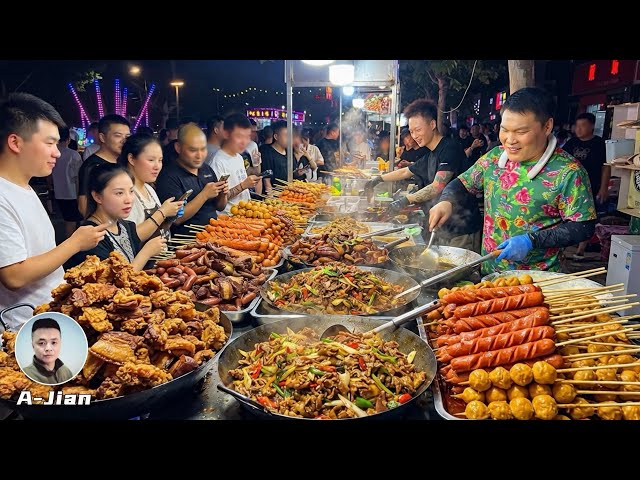
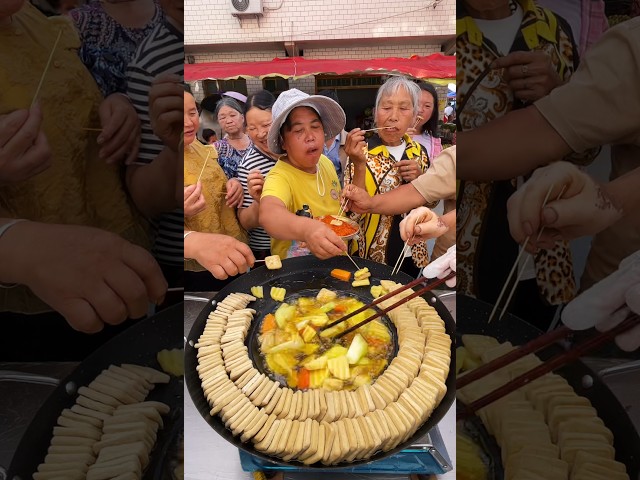
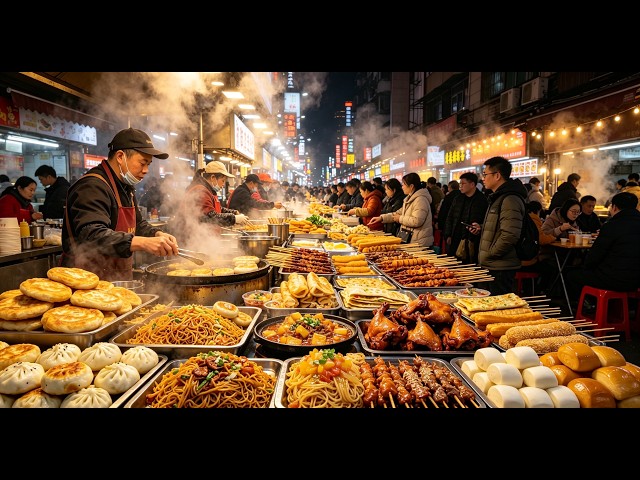
street, a breeze, and the aroma of street food. There are stalls selling skewers, stinky tofu, dumplings, jianbing, liangpi, and even milk tea. In front of each stall, a few people are standing, waiting for their food and chatting with friends. You walk over slowly too, looking at each stall, thinking, "What do I want to eat?" First, you see a skewer stall. The smell of the grilled skewers is really fragrant, the air is filled with the scent of roasted meat. The skewer vendor is very welcoming, and when he sees you, he says, "Hello, what would you like
to eat?" You're a little nervous, because you want to order in Chinese, but you're also afraid of making mistakes. But that's okay, let's give it a try. You can say: "Boss, I'd like two chicken skewers and one lamb skewer." This sentence is very simple, all basic words. The vendor hears you and says, "Okay, spicy or not?" In China, the most common question for street food is "Spicy or not?" If you want it spicy, you can say, "A little spicy, please." If you don't like spicy, say, "No spicy." The vendor will nod and start grilling. You hear the "sizzle
sizzle sizzle" sound, the skewers slowly turning golden brown over the fire. You keep walking forward and see a jianbing stall. Jianbing is very famous in China, a snack many people eat for breakfast or dinner. The vendor is making a fresh jianbing. He spreads the batter on the griddle, uses a scraper to spread it into a perfect circle, then cracks an egg on top. Just watching it makes you hungry. The vendor sees you watching and asks, "Want one?" You can say: "Okay, I'll take one. Not too spicy." The vendor will ask, "Want to add ham? Want to add
cilantro?" You can say, "I'll take ham, no cilantro." Conversations about street food are usually very simple, just "want or not want" and "add or not add." You'll feel very relaxed and realize that Chinese can really be used in daily life. You keep walking and see a liangpi stall. Liangpi is a cold dish, a bit sour, a bit spicy, very refreshing. You see a guy eating it happily, and you want to try it too. You walk over and say, "Boss, I'd like one order of liangpi." The vendor will ask, "Want cucumber? Want peanuts? Want spicy?" You can answer slowly.
If you want more flavor, you can say, "I'll take everything. Light on the spice." If you want it refreshing, say, "No spicy." The vendor makes it quickly. He puts the liangpi, cucumber, and peanuts in a bowl, adds the seasonings, and hands it to you. You take a bite and it's so good you want to smile. You think to yourself, "Wow, with such simple Chinese, I can order such delicious food." Walking along, you see a stinky tofu stall in the distance. You might not be used to the smell of stinky tofu, but many people say "it smells awful but tastes
delicious." You can smell it from far away. As you walk over, the vendor is frying the stinky tofu, piece by piece, golden brown. His voice is loud and cheerful: "Come, come, come! Stinky tofu, delicious!" You kind of want to try it, but you're also a bit scared. You think about it, then say, "Boss, I'll take a small order." The vendor is happy to hear you speaking Chinese. He says, "Want it spicy? Our spicy is really good!" You smile and say, "Just a little spicy." He adds a little spice and gives you some sauce. You take a bite, and the flavor is
really, really unique, a bit strange, but also delicious. You feel like you've truly become a street food explorer on the streets of China. You keep walking and buy some tanghulu. Tanghulu is simple, just hawthorn berries coated in a sweet, hard sugar shell. You can tell the vendor, "I'll take a big one." The vendor will smile at you, and hand you a shiny, glistening tanghulu. You eat it as you walk, feeling like a kid again. You see a child nearby eating one too, and it seems like everyone is a little happier because of that sweetness. Walking along,
you start to feel a bit thirsty. You see a small milk tea cart. Milk tea is extremely common in China, and many young people feel like something is missing if they don't have milk tea for a day. You walk over and say, "Hello, I'd like a cup of milk tea." The vendor will ask, "Full sugar, half sugar, less sugar, or no sugar?" You want to be a bit healthier, so you say, "Less sugar." The vendor asks, "Want ice?" You feel a bit cool, so you say, "No ice, no ice please." The vendor nods and starts making the milk tea. You watch the boba pearls bouncing in
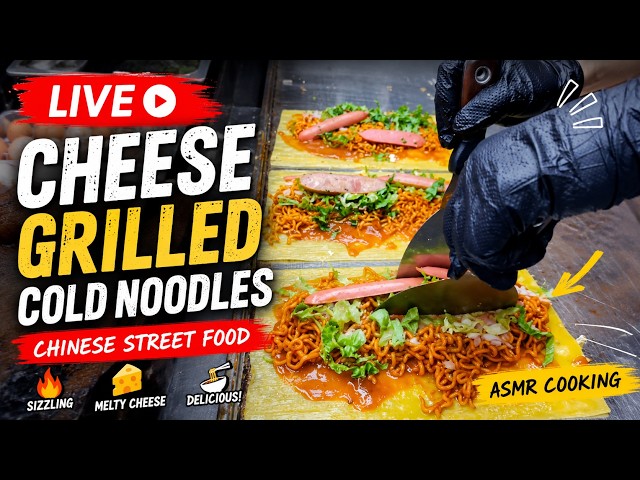
the pot, watch the tea being poured into the cup, and hear the "pop" of the sealing machine. The vendor hands you the milk tea, and you say, "Thank you." He'll say, "You're welcome." You continue walking, sipping your milk tea and watching the people on the street. Someone is buying grilled corn, someone is buying grilled cold noodles, someone is buying teppanyaki squid, someone is eating hot dry noodles. Everyone looks ordinary, but everyone is enjoying a very simple, very warm moment, and that is "eating." In this moment, you also feel the pace of life
slow down a little, become gentler, and simpler. You realize that buying things on the street isn't just about eating, it's about feeling like you're living in a new place, truly blending in. You also realize that speaking simple Chinese with the vendors isn't difficult at all, because everyone is very friendly, and they're also really happy to hear you speaking Chinese. You keep walking and see an auntie selling dumplings. Dumplings are a very important food in China, found everywhere, whether in the north or south. You walk over and say, "Auntie, I'd
like an order of dumplings." The auntie asks, "Pork? Chicken? Or vegetable?" You say, "Pork." The auntie asks, "Want vinegar? Want chili oil?" You can say, "A little vinegar, no chili oil." The dumplings come up quickly, steam rising from the bowl. You take a bite and feel warm and comforted. The auntie watches you eat and asks, "Are they good?" You nod and say, "Very good." The auntie smiles happily. After finishing the dumplings, you keep walking and see a sweet potato stall. In winter, roasted sweet potatoes are especially fragrant and very warming.
You walk over and say, "Boss, how much is this?" The vendor will answer, "Five yuan each." You say, "Give me one." The vendor takes a hot sweet potato out of the oven and hands it to you. You hold it in your hands, and it's really warm. You take a bite, it's sweet, and it tastes like home. Street food is just like that—simple and happy. You keep strolling along and see a cart selling egg-filled pancakes. The pancake is crispy on the outside, soft on the inside, with egg, vegetables, meat, and sauce. You walk over and order one, saying, "Not too spicy."
The vendor asks, "Want to add cilantro?" You say, "No." The vendor makes it quickly, you take a bite, and you're speechless because it's just that good. You eat slowly, walk slowly, and feel the evening breeze is really pleasant. As you walk, you see a place selling chow mein. You're a bit full, but you still want to take a look. The vendor is stir-frying noodles over high heat, moving quickly, the noodles jumping in the wok. People are waiting, some are chatting. You stand there watching for a while, and the vendor asks, "Want an order?" You smile and
say, "Not today, I'll come back next time." The vendor says, "Okay, see you next time." You keep walking and see a fruit cart. The lights on the fruit stall are bright; the strawberries, grapes, and oranges all look beautiful. You buy a small box of strawberries and tell the vendor, "I'd like the sweeter ones." The vendor picks out good ones for you and hands them over. You say, "Thank you." The vendor says, "You're welcome, take care." You continue forward, the streetlights slowly getting fewer, but your heart feels warm. You ate a lot today, and you
also learned a lot of Chinese. You realized that the best way to learn is to combine Chinese with real life. You can buy food with simple sentences, you can chat with vendors using simple words, you can make an ordinary evening special with simple expressions. You also discovered that Chinese people are very willing to help you, they'll listen to you, they'll smile, and they'll say, "Hey, your Chinese is pretty good!" You slowly walk to the end of the street, the wind has died down, the streetlights are dimming, you feel a bit tired, but it's a warm,
happy kind of tired. You think to yourself, "Today was really great." And you know that when you finally come to China for real, you'll definitely be able to order street food in Chinese, you'll definitely be able to have little conversations with the vendors, you'll definitely find it very interesting, and you'll feel very free. That's all for today's show. Thank you for listening this far, and thank you for walking with me down this imaginary Chinese food street. I hope today's story can lighten your heart a little, and also make you feel that learning
Chinese is actually simple and a lot of fun. See you next time.