Xi’an Night Markets: Muslim Quarter and Local Street Food
Video transcript
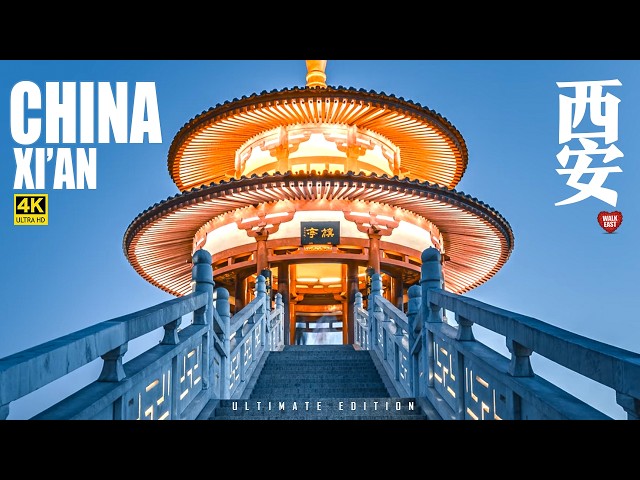
When night falls in Shian, the city doesn't sleep. It cooks. Lanterns glow above narrow streets, grills flare to life, and the air fills with the scent of cumin, chili, and freshly baked bread. This is the ancient capital of China, once the starting point of the Silk Road. And after dark, its night markets tell a very different story than most people expect. Here, Chinese and Muslim cultures blend seamlessly. Lamb replaces pork. Flatbreads replace buns. Noodles are pulled by hand, stretched and slapped against wooden
tables as crowds gather shoulderto-shoulder, waiting for their turn to eat. This isn't the China most travelers imagine. It's bold, it's smoky, it's deeply local. Tonight, we're exploring Xian after dark, diving into one of China's most famous and misunderstood night market scenes, where every dish carries centuries of history and every street tells a story. The Muslim Quarter. Gian's beating heart at night. If Shiion has a soul after dark, it lives here in the Muslim Quarter. As evening settles in, the narrow streets fill
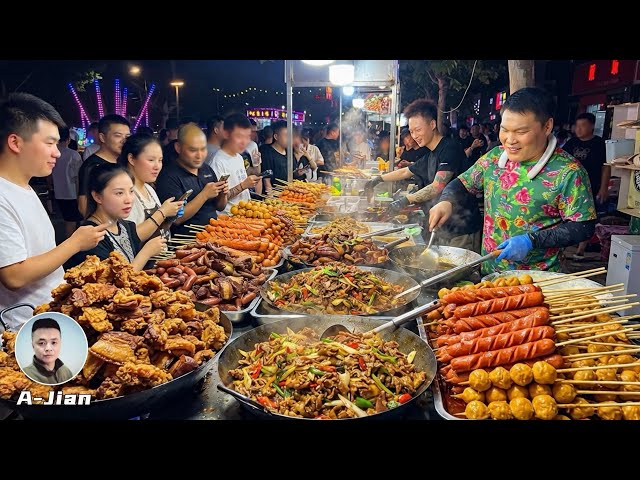
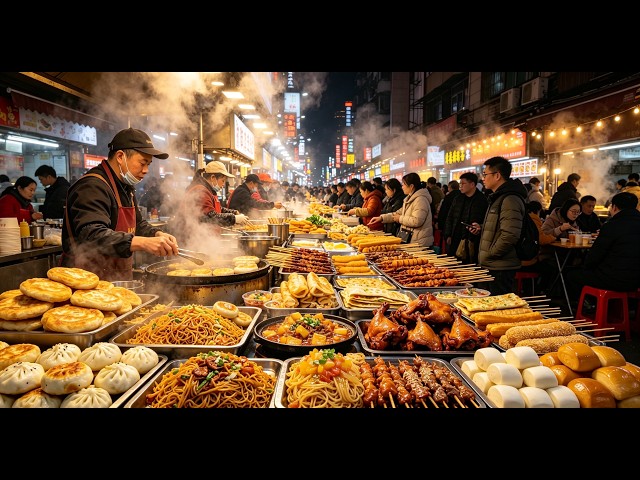
with smoke, voices, and the steady rhythm of grills firing up for the night. Lanterns glow overhead, illuminating rows of food stalls that stretch as far as the eye can see. This part of the city has been shaped by centuries of trade along the Silk Road. Muslim Hui families have lived here for generations. And their food tells a story you can taste immediately. Pork disappears from menus, replaced by lamb, beef, and bread baked fresh throughout the night. The flavors are bold but balanced. Cumin, chili, garlic. Warm
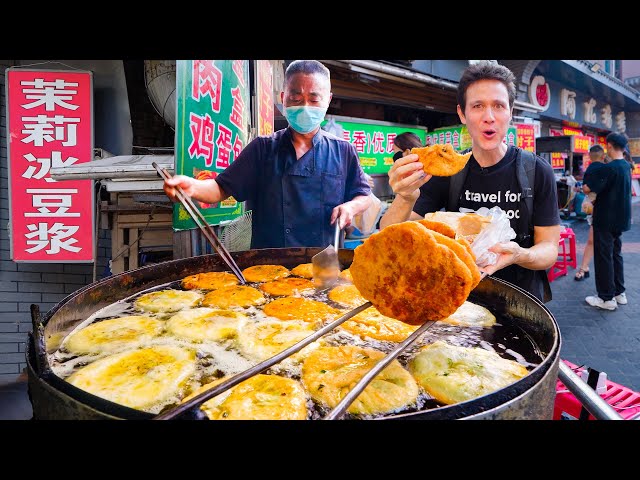
spices carried through the air as crowds move slowly from stall to stall. Lamb skewers dominate the scene. Thick chunks of meat are threaded onto metal rods, dusted generously with cumin and chili, then laid across open flames. Fat drips onto the coals, sending up bursts of smoke that cling to clothes and hair. The unmistakable scent of Shian at night. Nearby, flatbreads bake inside clay ovens, slapped onto the walls by hand, and pulled out blistered and golden moments later. Handpulled noodles stretch across wooden
counters, slapped, folded, and dropped into boiling pots with practiced ease. Vendors work fast, barely looking up, while customers watch intently. Bowls ready. Everything here is cooked in the open. Nothing is hidden. The food is honest, loud, and deeply rooted in daily life. Despite the crowds, there's a calm rhythm to the chaos. Families eat together. Locals stand shoulderto-shoulder with travelers. No one rushes. This isn't a place you pass through. It's a place you stay, eat, and slowly understand. Location: Muslim
Quarter, Central near the Drum Tower area. Price range. Most street food dishes range from 10 to 30 WAN RMBB, about $1.50 to 4 USD per item, making it easy to sample multiple dishes in one night. Sanjinkao Night Market, where locals actually eat. Just a few streets away from the crowds of the Muslim Quarter, the energy shifts. The smoke is still thick, the grills still roar, but the voices are quieter, and the pace feels more purposeful. This is Sajiniao Night Market, a food street many locals prefer. Once the night
settles in here, stalls are smaller and menus are shorter. Vendors recognize regulars. Orders are placed without words, just nods and gestures practiced over years. The food doesn't change much from the Muslim quarter. Lamb skewers, handpulled noodles, flatbreads, but the feeling does. This market feeds people who come here every night. Not just to browse, but to eat. Skewers hit the grill hard, coated generously with cumin and chili. Flames licking the edges as fat drips onto hot coals. Bowls of noodles arrive heavier,
less decorative, built to satisfy rather than impress. Bread is torn open and filled quickly, eaten standing, juices soaking through thin paper wrappers. There's no space wasted here. Every stall serves one or two things perfected through repetition. Nothing is rushed, but nothing lingers either. People eat, talk briefly, and move on. It's efficient, grounded, and deeply local. Sajinqiao doesn't try to charm you. It doesn't need to. This is where Shiion eats when the night is no longer a spectacle. Location: Sajiniao
Street, just north of the Muslim Quarter, Central Shi. Price range. Most dishes range from 8 to 25 W, about 1 to 3.50 per item. Yong Shingfang Food Street, Old School Shangchi flavors. If the Muslim quarter shows Xian's fire and Sajinqiao shows its routine, then Yong Jingfang food street shows its memory. This market feels different the moment you arrive. The streets are wider, the buildings styled after old courtyard homes, and the food leans heavier, built for cold winters, long days, and generations of workers. This
is Shanchshi cuisine in its most traditional form, shaped by landlocked geography and history rather than trade. Here, vendors cook dishes that don't rush. Thick wheat noodles are torn by hand and dressed with chili oil and vinegar. Bowls arrive deep and heavy, meant to sit with you. Rujamo fillings simmer longer, darker, richer. Nothing is light and nothing is wasted. Many stalls here focus on regional specialties from across Shani province. Each one representing a different town or village. Signs proudly list origins.
Recipes are passed down, not reinvented. The cooking feels deliberate, almost stubborn. And that's the point. Crowds still gather, but they move slower. Families sit together. Older locals linger. Tourists wander. But this place isn't built for spectacle. It's built to preserve flavors that define Xiian long before night markets became attractions. Yongingfang doesn't shout, it grounds. Location. Yong Xingfang Food Street near Dong Xin Street, east of Xian City Center. Price range. Most dishes range from 15 to 40 ren
minbi about 2 to6 US depending on portion and specialty. Shuan man cultural street Xian's quiet soul. Just beyond the smoke and noise of the night markets, Xian slows down, lanterns dim, footsteps soften, and the city reveals a different side of itself along Shu Yuan Men Cultural Street. This narrow stone-paved street sits near the old Confucian temple and has long been associated with scholars, artists, and craftsmen. Instead of grills, and walks, you'll find inkstones, calligraphy brushes, handbound books, and scrolls
hanging quietly from wooden doorframes. Artists sit at low tables, brushing characters onto rice paper with calm precision. Each stroke is deliberate. Each pause matters. Locals stop to watch, not to photograph, but to appreciate the craft. This isn't staged for tourists. It's practiced daily, the same way it has been for generations. Shuan feels almost untouched by time. Tea shops humly. Antique stores display seals, jade, and carved wood. The smell of ink replaces the smell of spice. After the intensity of Shian's night
markets, this street feels grounding, a reminder that food may feed the body, but culture feeds memory. It's the perfect counterbalance to Shion after dark where the markets are loud and communal. Shuan is quiet and personal. Location near the Confucian temple south of the Muslim Quarter. Central Shiion cost free to explore. Calligraphy pieces and artwork range widely depending on craftsmanship. East Street Dong Dajier where old Xian meets the new. If the night markets show how Xian eats, East Street Dong Daji shows how
the city moves. This is one of Shiion's main pedestrian arteries, stretching through the heart of the city and pulsing with energy long after sunset. Neon signs flicker above crowds flowing steadily in both directions. Shoppers, families, students, street performers, all moving through a space where ancient walls and modern storefronts coexist effortlessly. Unlike the focused intensity of the markets, Dong Dajier feels open and expansive. Chain stores sit beside small local shops. Street snacks appear between retail
entrances. Music drifts through the air as vendors sell skewers, fruit, and sweets to people passing by without stopping for long. This is everyday Shiion. Not preserved, not curated, just lived in. The street connects worlds. From the historic Drum Tower area toward modern shopping districts, and it acts as a natural transition point. You feel the city shifting as you walk. From old stone lanes to glass storefronts, from traditional lantern light to LED glow, Dongdaji doesn't demand your attention the way a night market
does. It earns it slowly through movement, sound, and sheer scale. It's the kind of place that reminds you Shiion isn't frozen in history. It's a city still very much in motion. Location: East Street, Dong Daji, Central Shiion, connecting the Drum Tower area to eastern shopping districts. Cost free to explore. Street snacks typically range from 5 to 20 ren minimi about 0.75 to3 US. Shian reveals itself slowly not through monuments but through movement. In the heat and smoke of the night markets, you taste the city's silk
road roots. In Sajinqiao, you see how locals eat when no one is watching. Along East Street, the city stretches out, modern, crowded, and constantly in motion. And just a few steps away on quiet stone paths like Shuan, Shiion exhales, preserving traditions that don't need to shout to survive. This is the ancient heart of Shian still doing what it has always done best. Bringing cultures together not through spectacle, but through daily life. Food cooked in the open. Streets walked every night. History woven into routine.
Nothing here feels staged. Nothing feels frozen in time. Seion isn't a city you rush through. It's one you walk, taste, and slowly understand after dark. If you enjoyed this journey, hit like and subscribe. It's free. It helps the channel grow, and it lets me keep sharing stories like this. One city, one street, one night at a time. And tell me in the comments which part of Shien would you explore first after sunset.