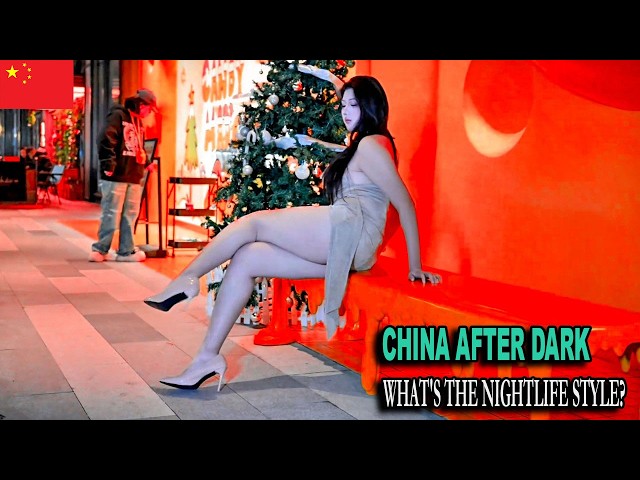
Why Lonely Chinese Vloggers Are Taking Over YouTube
Video transcript
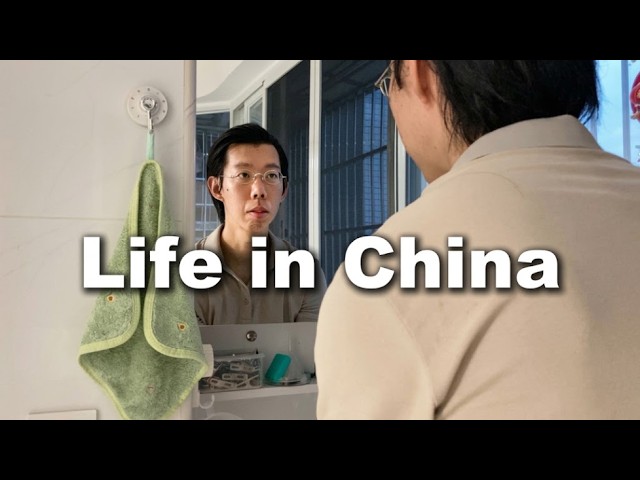
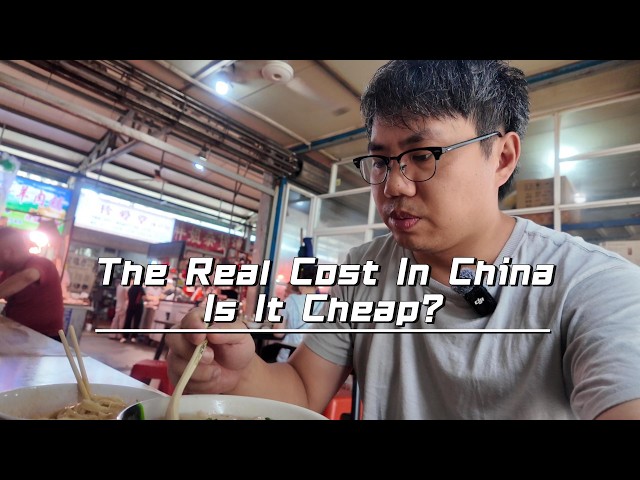
This is the lonely life of a 32-year-old man living in China. Every day I get up and go to the bathroom, then I look outside. Then I look at my Winnie the Pooh hugging a radio antenna. Then I look outside. Check out my Pokémon plushies from Gotcha. Zaza Zaza I want to show you what my weekend looks like and the 36 living completely on my own in a new city. Shaolin My ex-husband and I divorced a few years ago. ago. Kobo Kobo Hi, I'm Kobo. Hi, I'm Kobo. I live in Chengdu, China. No job, not married, no house, and no car. and no car. In many countries,
that might simply mean life hasn't gone as planned it. But in China, But in China, being 36 is supposed to mean you have been your life out. Yomi Hi everyone. My name is Yomi. I'm 30 years old and I live alone in Shenzhen, China. Shenzhen, China. Chun Chun Two years ago, I panicked, too. People around me were getting married and having children. having children. Ting Gongyi Gongyi What's it like to live alone in a big city as an older single woman? Lucy now Lucy now 30, single, jobless 30, single, jobless Yoyo Yoyo I'm 31 years old and I've been living
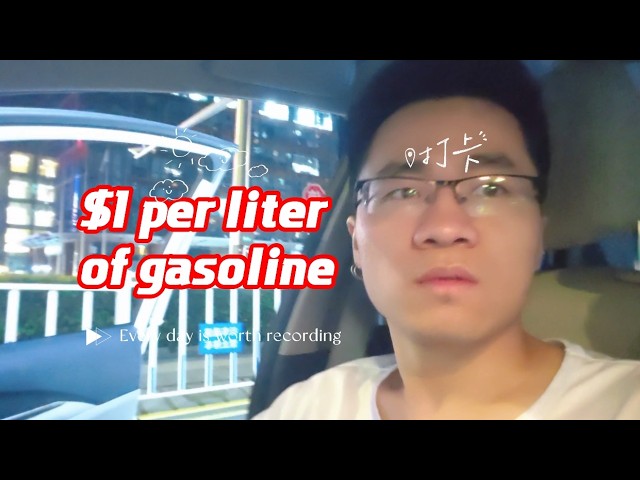
and working in Shenzhen for nearly 10 years. years. I worked in international logistics at a cigarette factory. cigarette factory. Luke Luke What is it like to live alone in China? Do you get lonely? Today Today I want to take you into my life. How hard Chinese high school students and their mothers live? What is the real life of an ordinary family in China like? like? Li Yoyo Li Yoyo I ask myself am I happy living alone? My answer is yes. Jingjing daily life Ali, a simple YouTube search returns more than a dozen YouTube channels all talking about the
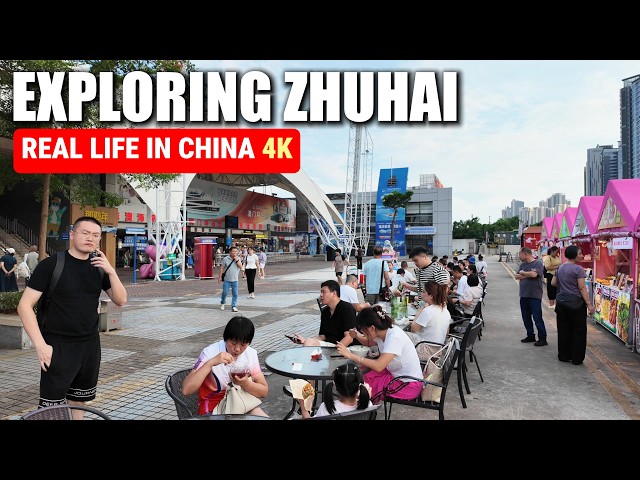
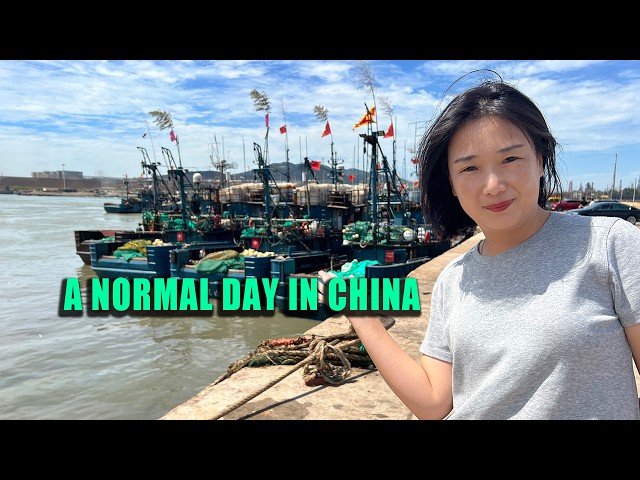
exact same thing. Mostly done with AI narration, the same type of I'm 30 plus, lonely, and sad, and unmarried in a big city in China. And the videos consist of them doing very simple daily tasks like commuting to work, eating, and just walking around China. Then increasingly you're seeing these videos. If you watch them long enough, you can find that they're almost like carbon copies of each other. The same style of videography, almost identical topics, and scripts, and pretty much the same theme throughout their entire channel. And uh these accounts
obviously are based in China, but they're able to somehow access YouTube saying that they're lonely. Seemingly they're negatively portraying society in China, which according to our traditional beliefs we would be thinking that oh no, the CCP's going to get them. But here it seems the plan is more sinister. Well, before we continue, to outsmart the CCP, we need this. Here's the thing, a healthy energized population is harder to control. I've got this bottle of NMN or nicotinamide mononucleotide from Black Forest Supplements with me, and this is a natural
supplement that supports your body's NAD+ levels, which is required in cellular functions. And the FDA actually tried to turn it into a commercial prescription drug, but fortunately consumers and the Natural Products Association won in a lawsuit keeping NMN available without a prescription. And a recent Harvard study, which you can check out here, found that NMN helped reduce weight, cholesterol, and blood pressure in overweight adults. Now, as we age, our NAD+ levels naturally decline, and NMN helps to replenish them to support healthy cellular
function. Here from Dr. Andrew Huberman, a neuroscientist and professor at Stanford University School of Medicine. Explain NMN for people. It's a precursor for NAD+. for NAD+. Right. Right. So, um NAD is critical to energy production in all cells. Um vital. Um and levels of NAD tend to go down as we age. Um it's an absolute requirement for cellular health and life. You need it. Um some years ago, as uh David Sinclair came on this podcast and um and discussed that his laboratory is a tenured professor of genetics Harvard Medical School and other
laboratories were starting to explore stimulating the NAD pathway as a tool for extending lifespan in mice. And it the there were already some data from yeast. Um there are now some clinical trials in humans. Um you can't just take NAD, or you can, but it would doesn't get into cells very easily. Here I'm painting with a broad brush. But there are basically two ways that you can tickle this pathway, increase NAD. One is to take NMN, right? Some people just will try different B vitamins, but NMN vitamins, but NMN Now, for the good news. The 4th of July
promotion already ended, but I asked to Black Forest to bring it back exclusively for my audience. So, for the next 48 hours, you can get buy one, get one for free across the entire store, plus a free bottle of NMN with every order. That means you buy one bottle and you receive two for free. Three bottles for the price of one. This offer is only available through my link in the description or pinned comment, and you won't find it on their website. Once the 48 hours are over, the promotion ends. So, use my link below to claim the deal. So, these were
making rounds on YouTube lately, and if you search up their names on Chinese social media, they're not real influencers inside China. So, clearly, this is something targeted towards the Western audience. And we know that in China, the CCP controls all forms of media and entertainment, even though the Chinese ambassador to the Philippines would try to deny otherwise. It's just a media's, you know, action, and it's nothing related to governments. And there's so many medias in China. Cannot ask each media, each video, each article, each paper, you know, to
to to try to control. No, no, no. Now, this happened. This was an interview with the CCP's ambassador denying that China Daily's recent racist video calling Filipinos monkeys was not the government's action. Their downplaying or this denial is relying on a technical distinction between the Chinese government and the Chinese Communist Party. But, on China Daily's own website, it says that it's supervised by the CCP Central Propaganda Department and also overseen by the State Council, which is the government. So, this idea that saying the government is
somehow different than the party or trying to deny any aspect of it is simply not true. simply not true. And, of course, it doesn't make this video portraying a racist portrayal independent of the ruling Communist Party. And in other words, we know that the CCP is quite racist. But, anyways, that's just kind of to prove my point, okay? Social media is also controlled in China. You cannot make content that's not controlled by the party. This is clearly something that that they especially care about, which we're going to talk about today, right? You have
the same sad piano, the same weird silky AI voice, although some of them will have recently been doing their own voice-overs now because people find this weird. Like, I've even come across this Reddit thread, which basically, you know, is calling out channels like ZaZa in China for in China for doing this stuff. And it just seems weird to people. It doesn't seem that authentic, even though the content or the theme in itself is quite authentic, right? Okay. So, aside from, you know, basically a bunch of these channels popping up with millions of views,
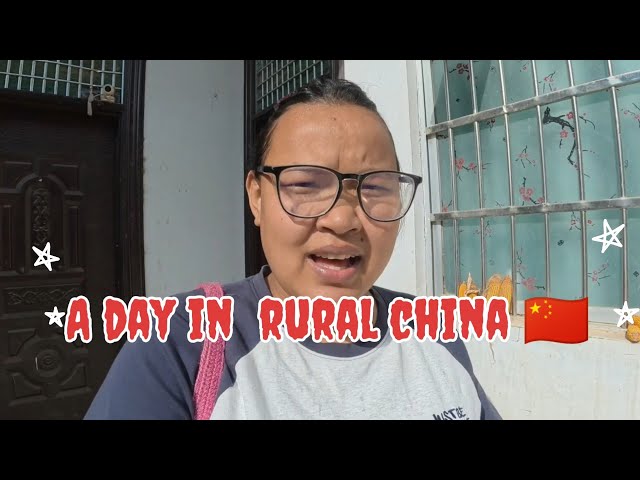
people found out that these channels have been actually somewhat of self-awareness, I guess would be uh the word, that they started to reveal themselves with videos like this. Lately, you probably noticed something stranger is happening in China. Why now? Suddenly, more and more Chinese people are starting YouTube channels. In my previous videos, many friends asked in the comments, "Why have so many Chinese vloggers suddenly appeared on YouTube over the past few months sharing their daily lives?" is the very real economic motivation. motivation. The
Chinese workplace is currently undergoing unprecedented structural undergoing unprecedented structural pressure. pressure. YouTube is blocked in China, but somehow, here I am talking to you. And lately, maybe you have noticed something strange. something strange. More and more regular people from China are popping up on YouTube. I am one of them. Just filming our apartment, meant food, rent, jobs, rent, jobs, anxiety, anxiety, and daily life. and daily life. Why are so many videos from China about being alone? being alone? Lately, I have been seeing
comments like this a lot. "Why is everyone in China alone? Does nobody have friends anymore? Are they real or just script?" To be honest, I understand why people ask these questions. If you've been watching YouTube recently, you'll have probably noticed it, too. There are more and more videos from China about living alone, being single, or not have many friends, or struggling to find work. Why are there so many Chinese people's posting uh you know, accounts posting on YouTube and whatnot? It sounds like they're telling you that the exact reason why
they're here is is very innocent. Uh the people in China are going through a bunch of stuff. You you the Chinese society increasingly lonely. It's hard to find jobs and things are just not looking good for people. Again, on the surface this looks like that the CCP is losing control, that they're losing the opinion war. Tons of people in China are now using VPN to scale the firewall to access YouTube, which is again banned. And yet, you know, something's off, right? It just simply does not happen this way. Accounts like Zaza in China seems to suggest that
he's moving to a different city in every second video. And you got to question are any of these real? Well, I can't make the assumption that all of them are fake or real, but one thing that's very clear in these videos is that they don't talk about politics. They're not the traditional type of videos that you see from the propaganda part of the CCP where, you know, it's like great, glorious, and righteous, right? There's no flags mentioned about the People's Republic of China. There's not even any mention of the government at all. It's just a simple
daily slice of life. And that's the whole trick. There's nothing to argue with. There's just simply nothing that seems wrong with these videos. And that's precisely what's wrong with them. Okay, so this is just one part of a two-pronged strategy. The other part, according to French news Le Monde's investigation, is increasing the presence of real foreign faces and real people as the weapons of propaganda. Go to the city of Chongqing right now and you'll find foreign influencers dangling in safety harnesses off of the 56th floor of a skyscraper,
captioning it like they're free soloing the building. Monorail that drives straight through a residential tower. A Gongan blogger with millions of followers called the city full of wonders. None of it is fake. Exactly. All the buildings are real. The monorail is real. What's manufactured is that the the funnel that gets every single one of them pointed at the same city. Pretty much the exact same six scenarios or shots with the same angle cuz the algorithm rewards that and they tell the story of Chongqing's vertical neon skyline as sort of the rewarding
factor for coming to China. Like this is our new Grand Canyon. This is the new New York City and Dubai. And this is something that only happens in China. The timing is also not an accident. Chongqing was going viral, the reputations of Western governments were taking a beating pretty much around the same time. You know, you have people that are actively downplaying the Western civilizations and making the beauty of the Eastern civilization, in particular China, shine. And so with all of this, what you're seeing is that the public opinion of the West has
decreased or dropped dramatically, while the opinion of Beijing has increased. So, China's own Foreign Ministry publicly welcomed this shift, framing it as young people finally seeing China clearly. But we know that that's simply not the truth. This is part of the strategy that for a very long time has been the central propaganda direction set up by Xi Jinping. In 2013, Xi Jinping set a directive for the whole propaganda apparatus, which is to tell China's story well. Five years later, a party conference on propaganda, held only once every five years,
started to sharpen it. The ability to communicate internationally, to make China's voice heard, to present the world a complete multi-dimensional China. That same year, the government opened its first-ever international its first-ever international communication center, which is a local office tied directly to the propaganda department. Their entire job is to manage how the outside world sees China on social media. The first city to get this wasn't Beijing, it wasn't Shanghai, it was Chongqing. So the stuff that you're now seeing on social media about
Chongqing, it all came from this international communications department international communications department or center. or center. And that program didn't stay small. By one academic account published in late 2025, there are now more than 150 of these centers running across the country. But the biggest is still Chongqing. Some of them run their own polished accounts. Aerial sunset footage of Shanghai, glossy rural province tourism pages racking up hundreds of thousands of followers each. One coastal center in Fujian province alone claims over 600
accounts across foreign platforms like on YouTube and others. And Fujian isn't just posting senses, it sits directly across the strait from the island Beijing is is swearing that they're going to invade, Taiwan. A lot of this isn't even hidden. 10 Indonesian influencers, including a beauty pageant winner and her sister, spent 10 days in China in February of 2025 on a trip whose organizer publicly thanked the Chinese Embassy. Two Taiwanese students told a French newspaper they were flown in, all expenses covered, to a hyper-modern AI boom city, and then
encouraged, not required, not required, to post about it. Nobody handed them a script, nobody had to, because they were shown the exact thing that they want them to see. And a lot of this stuff it looks impressive as heck, and so they draw their own conclusions on camera, being that China is way ahead of the rest of the world. In July of 2024, the Chinese Communist Party held its third plenum, one of the most important meetings, and they came out with this resolution, which was in order to build, and quote, more effective international communication
system. A few months later, Xi Jinping told the party to get more creative. His words were to go carry out the online external propaganda. So that's actually the term, it's called wangluo waixuan, which is online external propaganda. And the official guidance on how to do this is oddly specific. And the researchers recommended exactly what you're watching now, everyday life, small stories, emotional pull, foreign or non-official voices, because a normal person feels more impactful and honest than a state anchor in a suit. One research paper out of
Zhejiang actually praises this approach by name. They call it moistening things silently. Sounds really weird. One plausible production mechanism from this sort of behind-the-scenes look is something called an MCN. The multi-channel network system in China is so prominent, pretty much every single live streamer or influencer is signed up with one of these MCNs. They're kind of like talent agencies, but they handle your live streaming, they handle your post-production, handle your packaging, social media, and everything else. And when it comes to foreign
websites like YouTube, they also manage it that for you as well. So they will literally do all the distribution, all the monetization, to distribute these across western platforms. And this sounds really interesting because MCNs were also recently a target by the CCP to become uh regulated. In January of 2025, China's internet regulator, the Cyberspace Administration, drafted new rules that were seeking public opinion at the time, but you know, we know that these rules, once they're made into law, they've already been uh effectively being used. Like the
methods have already been done. It's just now they're trying to normalize it, right? But basically what they're trying to do was require the MCNs to keep, quote, correct political direction and correct value orientation. So essentially they have to bind every account they manage to a government back end to review content before it's published and to keep records of the videos for inspection. And so what that essentially means is if you want to be commercially successful in the space as a content agency operating inside China, well, you better stay within
the party lines. So this is not a conspiracy theory. This is essentially what they have to do. Now, we know that at some point you've got to wonder if this is the same company publishing all of these different channels. Well, the possibility is there, but we just don't have the evidence to back that up. China's broadcast authorities, they've described overseas mobile and social platforms as sort of the major battlefield for international battlefield for international communications. And they call for state institutions and private companies to build
audiences there and to recommend and support to to grow the the impact that it has on getting or winning over the public opinion of the Western world. So what you're not doing here is trying to show the world that, oh, look, China has a you know, every single year they got a military parade. What you're trying to tell the people that look, the next time you think about what we talk about in the news about China, right? Whether that's a concentration camps, organ harvesting, religious persecutions, uh human rights, or free speech, just think that hmm,
what Zaza what Zaza experienced this in China personally because look, Zaza is already there uh and he's not, so that must mean it didn't happen, right? What you need is something that you can relate to, what you can reference. Nobody's asking you to believe that the CCP is good here. They're just showing a woman who is making dumplings or eating noodles or just being alone in her apartment. And times that by 300 times more, and then China starts to feel like it's not a headline, but rather it's some place that you sort of know. It's a place where people
in it who are sad, just the same way you might be sad about your life. And then, this is the actual payout. Some part of your brain says, "The next time you read a story about China, China, it just doesn't match what you've seen." It's not because the story is fake, it just conflicts with your feeling that you built for free, one algorithm-fed video at a time. So, that's the strategy. It's not to win an argument, it's to make the argument feel unnecessary. So, Zaza is still lonely tonight. Shaoling is also lonely. So is Cobo. So is Yumi. So is Churen,
Ting, Gu Yi, Lucy Now, YoYo, Luke, Guang Guang, Li YoYo, Jing Jing, Daily Life, Real China with Lando, Ali, all of them. They're all lonely tonight. What I know is this, right? Somewhere in Beijing, there's probably a government office whose actual job is making sure you feel exactly what you just felt watching that sad slop video. Thanks very much for watching, and thanks again to Black Forest Summit for sponsoring this video. Please check out our 48-hour sale, and uh click the link in the description to go there. Thanks again, and we'll see you next
time.