Beijing Street Food Tour: 125 Authentic Flavors From Breakfast to Snacks
Video transcript
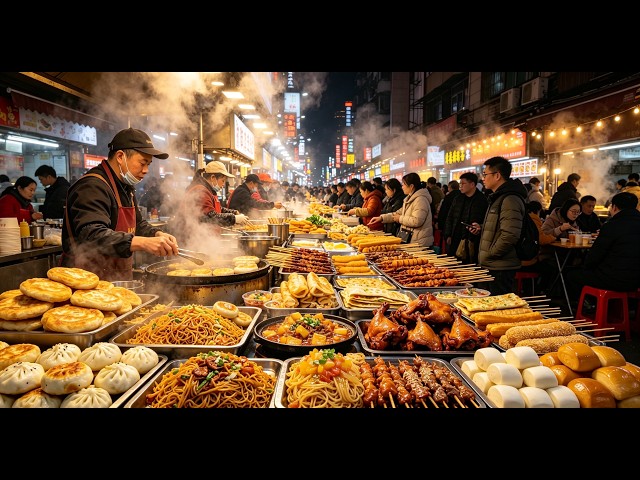
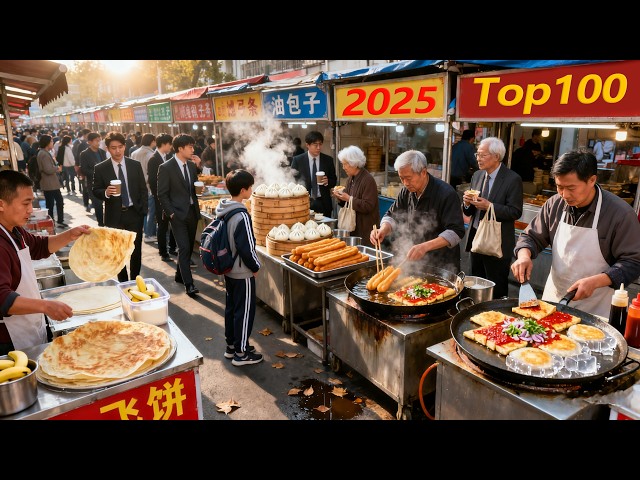
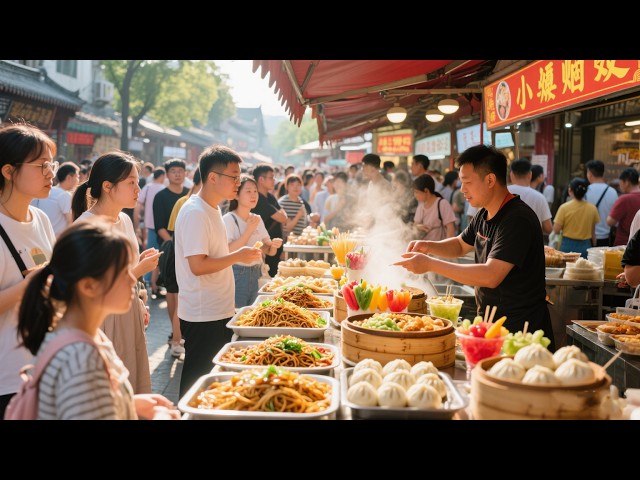
Hello friends, I'm Xiao Xin. This video took me a whole week to polish and compile, showcasing over 100 authentic street foods from Beijing, China. From traditional local breakfasts to various unique street snacks, this two-hour non-stop food sharing will take you on a journey through the vibrant street life of Beijing. Let's follow my lens and see! We'll start with a local breakfast. To make Beijing-style fried dough , first, the pre-proofed soft dough is gently pressed and stretched thin on a work surface into a round pancake larger than an iron wok.
It's soft yet chewy. Then, with both hands, it's lifted and slid into the boiling hot iron wok . The hot oil causes the pancake to puff up and sizzle, slowly turning from milky white to a tempting golden brown with a crispy "crunch." With a satisfying crack, it's soft and fluffy inside. This one is as big as a washbasin , enough for three or four people to share. Holding a hot one while strolling through the market, taking a bite, is the epitome of the lively and warm atmosphere of an old Beijing morning market—it's incredibly comforting. The
old-fashioned soft twisted dough sticks are super popular at Chinese markets and are a childhood taste many have enjoyed since childhood. First, the kneaded dough is rolled into long strips and twisted into pretty braids, then each one is slowly fried in warm oil. The milky-white dough slowly puffs up in the hot oil, becoming fluffy and soft from the inside out, finally frying until golden brown. You can smell the aroma from afar. The freshly fried twisted dough sticks, with their fragrant and sweet aroma, are the most delicious . The outer layer is
slightly crispy, while the inside is soft and chewy. A 4 RMB multigrain pancake is a popular breakfast choice from north to south, and it's a hot seller at morning markets. The multigrain batter is poured onto a hot, round griddle, quickly spread into a thin , even pancake with a bamboo scraper. Once set, it's brushed with homemade sauce, various toppings are added, and finally, it's rolled and folded – a hot, fragrant pancake is ready! The outer layer has a natural multigrain aroma, soft yet chewy, and when you bite into it, it's thin and crispy with
a "crunch." A burst of flavor, accompanied by the aroma of soy sauce, eggs, and fresh, savory vegetables, creates a delightful combination of soft, crispy, fragrant, and fresh textures. It's incredibly filling and satisfying. A serving of steamed buns costs 9 RMB. These are the warmest, freshly steamed buns at a Chinese morning market. The soft, rolled-out dough is filled with generous amounts of filling . With nimble fingers, a beautiful pleat is pinched into the center, and a plump, white bun is ready. The buns are steamed until they puff up, the soft
dough carrying a subtle wheat aroma, and the filling practically overflowing. The price is around 2.5 RMB per bun. People strolling through the market hold freshly steamed buns, eating as they wander. This is the essence of a Chinese morning market. The most authentic and touching flavor of roasted lamb leg : The raw meat, with its pinkish texture, sizzles as it's grilled, releasing its aroma that mingles with the smoky heat. As it's turned over repeatedly, the skewers slowly transform from pink to an enticing caramel color, with slightly charred edges.
Sprinkled with cumin and chili powder, the aroma is instantly unleashed, and you can smell it from afar. 10 RMB per skewer. One bite and it's crispy on the outside and tender on the inside, the fat bursting in your mouth. The unique oven-baked flatbread: First, the kneaded dough is rolled into a long strip, brushed with oil, sprinkled with scallions and a generous layer of white sesame seeds, and then placed in a special deep oven to be slowly roasted over charcoal. The high temperature of the oven wall bakes the flatbread until it puffs up and the edges
are slightly golden brown, while the sesame seeds are also roasted until fragrant . The freshly baked flatbread has a crispy and crunchy outer layer, but inside there are distinct layers, with the salty and savory aroma of oil , the freshness of scallions, and the fragrance of sesame seeds. The texture is crispy on the outside and soft on the inside, becoming more and more fragrant with each chew. A bowl of hot soup noodles at a noodle stall in the morning market is also the most comforting and delicious treat while strolling through the market. The chef
uses a special strainer to put thin noodles into a large pot of boiling water. In no time, they are cooked until translucent and chewy. They are then scooped into a pre-mixed soy sauce broth, topped with a spoonful of hot soup , and garnished with a few pieces of bright green vegetables. A bowl of hot noodles is ready. The knife-cut noodles, which are very popular in northern China, are made by placing the rested dough on a wooden board and using a special knife to cut the noodles. With a flick of the wrist, thin and even pieces of noodles fly into the
boiling pot like willow leaves. After the noodles are cooked, they are scooped into a bowl and topped with a generous spoonful of fragrant meat gravy . The freshly cooked knife-cut noodles are thick in the middle and thin at the edges, smooth on the outside and chewy on the inside , with a rich wheat aroma and a particularly satisfying chewiness. One serving costs 15 RMB. This is a traditional delicacy from the markets of old Beijing—braised pork offal with baked wheat cake. It's made with pork offal, tofu, and wheat cake, slow-cooked in a secret broth
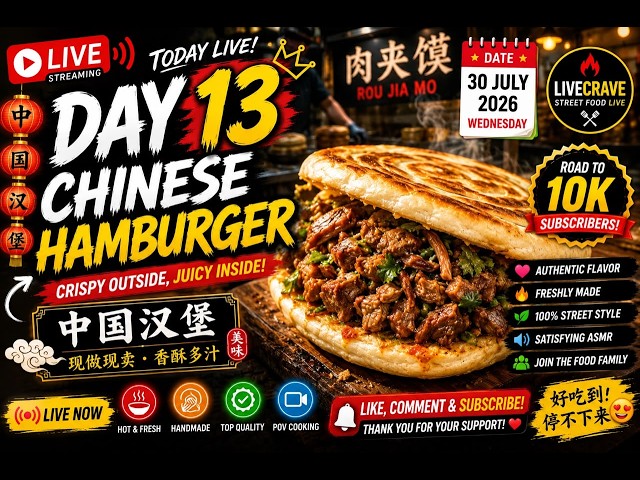
for a long time until tender and flavorful . Simmered in a bright red broth until tender and flavorful, the rich aroma of meat and sauce can be smelled from afar. The freshly served braised pork offal, with its large intestines stewed until soft and chewy... The bouncy, oily, and not greasy flatbread, soaked in the braising sauce, is chewy and flavorful. The fried tofu, also soaked in the broth, bursts with juice with every bite. It's a local favorite and a popular street food. Roujiamo (Chinese hamburger) is simply made by stuffing freshly stewed,
tender, and flavorful meat into a soft, baked flatbread. One bite is bursting with meaty aroma, the outer layer is soft, and the filling is savory and juicy. It's a must-try local delicacy when visiting a Chinese market. 10 RMB for a bowl of Liangpi (cold skin noodles). Liangpi is made from steamed rice flour, with a smooth, cool, soft, and chewy texture . It's cut into wide strips and served with crisp cucumber shreds and bean sprouts. Then drizzle with a secret sauce of vinegar and soy sauce, plus a touch of chili oil. Mix it all together for extra
flavor. The fried radish balls are incredibly fragrant. Fried yellow croaker is a must-buy snack for many people when visiting the market . First, clean the fresh yellow croaker, coat it with a layer of prepared batter, and then fry it in a large, boiling iron pot. The hot oil causes the batter to puff up instantly, tightly coating the fish. In no time, it's fried until golden and crispy . The freshly fried yellow croaker has a crispy skin, and even the fish bones become soft and can be chewed directly without any prickling. It has a light salty and
fresh fish flavor, and the more you chew, the more fragrant it becomes. The more you eat, the more addictive it becomes . This stall sells fried dough sticks , but the ones here are extra big . Roll out a long strip of dough , sprinkle with black sesame seeds, press it in the middle, and then fry it in boiling oil. The dough puffs up instantly in the hot oil, like blowing air , and slowly grows bigger and bigger until it becomes golden and fluffy. It's a full half meter long and thicker than an arm . Freshly fried dough sticks, crispy and crumbly on the
outside , are hollow and soft inside, with a subtle aroma of sesame and wheat. One stick is enough to fill you up. The popular steamed bun shop sells steamed buns, a classic staple food on Chinese tables. The steamed buns at the market are all handmade, freshly kneaded, fermented , and steamed in large steamers. They are white, plump, fluffy, and soft , without any unnecessary additives, allowing you to enjoy the pure wheat flavor . From ancient times to the present, steamed buns have accompanied Chinese people through three meals a day . Vegetable
dumplings are also a traditional Northeastern home-style coarse grain delicacy. They are made with cornmeal, millet flour, and other grains as the outer layer , filled with plenty of vegetable filling, and then pan-fried in a large iron pot until golden brown. The outer layer is crispy on the bottom, and inside is a refreshing vegetable filling with the unique aroma of coarse grains. They are not oily or greasy, healthy, and filling. Here, they are preparing to make corn pancakes . Corn pancakes are a traditional coarse grain home-style delicacy. Fresh
corn is ground into a batter, poured into a large iron pot brushed with oil, and pan-fried over low heat. The bottom of the cornbread is fried until golden brown and crispy with a smoky aroma, while the top is soft and fluffy with a rich, sweet corn flavor. The texture is fragrant and chewy. Freshly baked cornbread has a crispy outer layer that crumbles easily, while the inside is soft, sweet, and not oily at all, emphasizing the natural fragrance of corn . It's a staple food for older generations, now a healthy and delicious treat at the market. Grab
one while strolling around the market – it's hot and filling. It costs 2 RMB each. This side of the market displays various kinds of pancakes, each with its own unique characteristics. These pancakes are all freshly baked and sold on the spot, steaming hot when they come out of the oven , and you can smell the aroma from afar . They're affordable and can be eaten as a main dish or a snack. Market visitors can't resist buying a few. It's the most simple and comforting taste of everyday life at the market. The stir-fried fish uses wild fish caught from
Baiyangdian Lake, commonly including carp, crucian carp, and bighead carp. Fresh and plump, they have a natural aquatic flavor. The fish is first fried until golden brown on both sides before being placed in a large iron pot. Add scallions, ginger, garlic, soy sauce, and a secret sauce, then simmer over low heat for several hours until the fish is tender and flavorful, even the bones are softened. The cooked fish is firm and not dry, and the handmade noodles are savory and delicious. The scene of a chef making traditional cornmeal noodles is one of the
most popular and lively scenes at the old morning market. The chef first rolls out a thin, large sheet of dough mixed with cornmeal, then folds it layer by layer and cuts it by hand into evenly thick noodles. The entire process is done by hand, without machines, resulting in noodles that are chewy, smooth, and have a rich wheat and corn aroma . They don't fall apart even after long cooking and have a particularly chewy texture. These handmade noodles are a taste of childhood for many . People who come to the market love to buy some; they're suitable for
making soup noodles or stir-fried noodles at home. It's also the most authentic and heartwarming traditional craft at the market. The freshly baked pumpkin cake is a traditional old-fashioned pastry made with fresh pumpkin puree and eggs. The batter is made by mixing pumpkin puree, eggs, and flour , poured into molds, and baked in the oven. After baking, it's golden and fluffy. The freshly baked pumpkin cake has a rich pumpkin aroma , a slightly crispy crust, and a soft, fluffy interior with a natural sweetness. It's not oily or greasy, and both the
elderly and children love it. 18.8 yuan/500g. This is another popular multigrain pancake stall at the morning market. The snacks are all made on the spot, traditional Chinese snacks made with a variety of whole grain flour batter. They are a favorite street food for Chinese breakfast. This is a specialty food from Xinjiang, China - naan bread. It has a super exotic flavor . The chef is baking naan bread in a traditional tandoor oven. First, patterns are imprinted on the dough, then white sesame seeds are sprinkled on it, and then it is baked in the
high-temperature tandoor oven. The naan bread, which costs 5 RMB , is golden and crispy on the outside, soft and chewy on the inside, with a rich wheat and sesame aroma. It is savory and delicious, and tastes great even on its own. There is also a very special hairy tofu stall in the market. First, the tofu is cut into pieces and then baked in a warm and humid environment. The tofu naturally ferments, growing a fine layer of white mold. The vendors mix the fermented tofu with chili powder, salt, white wine, and spices , then seal it in jars. After taking
it home and letting it sit for a while, it transforms into a uniquely flavored fermented bean curd. It has a smooth, rich texture, a salty and slightly spicy taste, and a unique savory aroma, making it very appetizing. These handmade, freshly mixed tofu stalls are popular in the market, attracting curious onlookers who want to experience the charm of this traditional fermented food. A plate of fresh meat patties costs 35 yuan. The stall wraps kneaded dough around a generous amount of meat filling, flattens it into patties, and fries them in a large pot
of oil. The pancakes slowly puff up in the hot oil, frying until golden brown and crispy on both sides. The outer skin is fried until crispy, while the meat filling inside is fried until juicy and flavorful . One bite and it bursts with juice, the aroma of meat mixed with the fragrance of dough, savory and delicious. Fresh out of the pan, they are crispy on the outside and tender on the inside. A hot one is fragrant and filling. A serving of pan-fried buns costs 10 RMB. The stall owner first arranges the shaped buns neatly in a large iron pot, pours
water and oil over them, covers the pot, and simmers them in the steam. As the steam rises, the bottom of the buns is fried until golden brown and crispy , while the top remains soft and fluffy. Before taking them out of the pot, a handful of chopped green onions and sesame seeds are sprinkled on top, and the aroma instantly fills the entire market . The freshly fried buns are crispy on the bottom and crumbly, with a meat filling inside that is full of rich broth. Be careful not to burn your mouth when you bite into them . One bite and the crispy, soft,
fresh, and fragrant flavors burst in your mouth at the same time. A serving of braised meat also costs 10 RMB . It is also a popular "hard dish" on the Chinese table. Braised pork hock, braised pig's head, and braised pig's trotters—these rich, savory braised meats are etched into the taste memory of the Chinese people . After long stewing, the meat becomes tender and flavorful , infused with the complex aroma of spices and soy sauce. One bite is pure satisfaction. The vendors start braising the meat early in the morning, and the aroma fills the entire
market. In terms of consumer demand, China is the world's largest consumer of pork. Various food stalls and restaurants in the market consume large quantities of pork . Baked flatbread stalls are one of the most common street food stalls in northern China's large markets. Freshly baked, the flatbreads are golden brown on both sides, sprinkled with white sesame seeds. The outer layer is crispy and crunchy, while the inside is soft and chewy, with a rich aroma of wheat and sesame. They can be savory with a peppery and salty flavor, or filled with slightly
sweet brown sugar. They're delicious on their own, and can also be filled with meat or vegetables to make roujiamo (Chinese hamburger) or any kind of flatbread sandwich. These freshly baked flatbreads are also a representative of traditional craftsmanship. The master baker handles the entire process by hand, from kneading the dough and sprinkling sesame seeds to baking in the oven. The finished flatbreads are steaming hot and fragrant. The aroma that fills the entire market is a familiar, homely flavor etched in many people's memories. Walking through
the bustling Beijing morning market, you'll see all sorts of handmade noodles and local snacks, all crafted with traditional techniques passed down through generations. The simple ingredients and the lively, smoky atmosphere of freshly made food create a delightful ambiance. The rotating roasted chicken is a popular market item , a street food loved by young and old alike. The whole chicken is thoroughly marinated beforehand , skewered on metal sticks, and roasted evenly in the rotating oven until the skin turns a translucent reddish-brown. It's then
sprinkled with white sesame seeds for added aroma, resulting in a crispy, oily exterior. The vendor will use scissors to cut the whole chicken into small pieces. The skin is crispy and not greasy, and the chicken is tender and juicy. It can be enjoyed as a snack on the go or bought to be a hearty dish at home. Donkey Roll (Old-fashioned Bean Flour Roll) is a traditional Chinese handmade glutinous rice food, made fresh at the market. It is also often called bean flour roll. First, the glutinous rice dough is rolled into a thin sheet. The work surface is
covered with roasted soybean powder to prevent sticking. Then, the filling is evenly spread on the dough. There are many flavors, such as purple sweet potato paste, red bean paste, and hawthorn filling . After spreading the filling, it is tightly rolled into a long strip, coated with fine soybean powder, and then cut into sections for sale. The outer skin is soft and chewy. The bouncy texture of the soybean flour filling, with its rich soybean aroma and smooth, sweet filling , makes it a nostalgic dessert loved by young and old alike. A quick and easy
pick-up at the market is incredibly satisfying. Egg Burger (Meat and Egg Burger): This is a popular and affordable street food at the market. Made fresh to order using a special perforated griddle, the batter is fermented beforehand , resulting in a porous texture . The burger has a soft, fluffy exterior. The vendor uses a funnel to evenly pour the batter into the bottom of the mold , cooking it slowly over low heat until the exterior is golden brown and crispy. The soft , slightly caramelized exterior is filled with a whole fried egg and juicy meat
filling, offering a delightful combination of egg, meat, and flour flavors. It's very filling and perfect for breakfast or a quick snack at the market. You can buy it for just 5 yuan. When breakfast is a quick bite on the go, or a snack to enjoy while strolling through the market, the old-fashioned sesame layered scallion pancake is a favorite among young and old . This traditional handmade pancake, made using a double-layered iron plate oven for double-sided baking, has a crispy, layered outer layer and a rich scallion aroma. It's a popular everyday
food. The vendor prepares a soft, rested dough in advance, rolls it into a wide, thin sheet, and evenly spreads scallion oil, salt and pepper, and chopped fresh scallions on it. The flavorful filling covers the entire sheet , then it's tightly rolled into a long roll from one side. This roll is then divided into equal portions, sealed, pressed, and rolled into round pancakes. A layer of white sesame seeds is sprinkled on top for added aroma and shine. The finished pancakes are placed in the high-temperature iron plate oven, where they are heated
simultaneously from both sides , eliminating the need for frequent flipping and locking in the scallion oil aroma. Through baking, the pancakes expand and develop layers, resulting in evenly baked textures. The caramelized yellow spots and the fragrant aroma of roasted sesame seeds make the finished product distinct in layers. A gentle bite reveals a crispy, crumbly outer layer and a soft, fluffy inner layer with a rich, savory scallion oil flavor. The sesame seeds add a nutty aroma. It can be eaten plain or sandwiched with braised meat or pickled
vegetables. It serves as a filling staple food on the way to the market, or as a breakfast or snack. The preparation is simple and authentic. It costs 6 RMB and is a particularly classic old-fashioned grain snack. We often call it corn sticks . Common grains like rice are put into a special high-temperature puffing machine, and hollow strips are extruded. When freshly made, they are warm, crispy, and have the sweet aroma of the grains themselves. They are not greasy at all. In addition to the most classic original yellow corn flavor, there are also brown
flavors with black rice or cocoa. This kind of snack is basically... You can only find these at local markets and temple fairs, where vendors make and sell them fresh. The aroma can be smelled from afar. Chinese pork cracklings are a local specialty, essentially pork that's been rendered and fried until dry and fragrant. The pork is slowly fried in a pot to render out excess oil, resulting in crispy strips or chunks of meat . There are many choices for the cracklings; the most classic is the wide slices made from pork belly , with alternating layers of
fat and lean meat. After frying, they are golden and glossy, crispy and fragrant with every bite. There are also smaller pieces made from lean meat or pork kidney, with a firmer, chewier texture and a richer meaty flavor, perfect as a snack . Locals also enjoy them in many ways: they can be eaten directly as a snack or used in stews or noodles. The cracklings absorb the broth, becoming soft and not greasy, adding a rich meaty aroma to the dish. The super popular durian cheese pancake is a must-try. The large bowl on the left contains mashed durian pulp,
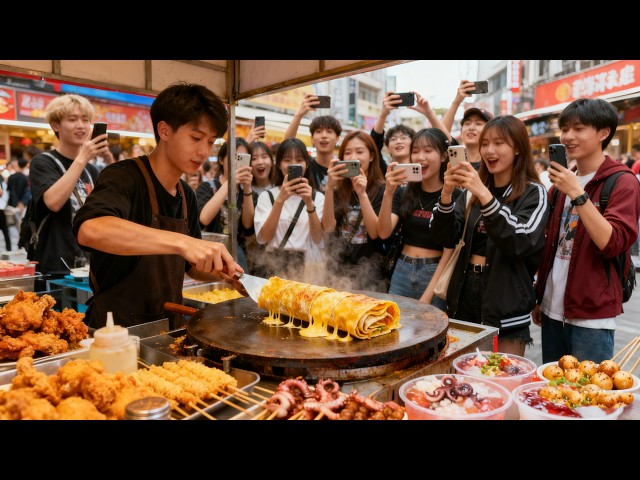
while the other bowl is overflowing with shredded cheese. Made fresh to order, the filling is incredibly rich in milky and durian aromas – these are the core ingredients. The vendor first rolls out a thin, soft round dough , then spreads a layer of shredded cheese, followed by a large chunk of durian pulp , and finally another layer of cheese. The dough is then sealed tightly, pressed into a round shape, and baked. The baked pancake has a golden-brown, shiny exterior with browned spots , a slightly crispy surface, and a soft, fluffy interior. When cut
open while still hot, the cheese will stretch into long, creamy strands. The sweet and savory durian pulp blends perfectly with the savory cheese . The black stinky tofu is the classic Changsha flavor; the tofu is first fermented and soaked in a special brine before being fried. The dark brown and crispy yellow version is the original flavor fried stinky tofu, with a milder and milder taste. Both are fried until crispy on the outside and tender on the inside, with many holes inside, making them particularly absorbent of the flavor. The fried tofu is
poured into a bowl and mixed with pickled cowpeas, cilantro, and minced garlic, then drizzled with spicy braising sauce and chili oil. The sauce seeps into the pores of the tofu and is served hot. It has a crispy outer layer, a soft and juicy interior , and a unique fermented aroma. The taste is sour, spicy, salty, and fragrant. It is a classic snack to eat while strolling through the market. Sauce-flavored pancakes are one of the most popular street food snacks in China. First, the kneaded soft dough is laid flat on a hot iron griddle and baked . The
high temperature instantly makes the pancake puff up with fine bubbles, and the pure wheat aroma comes out with the heat. After one side is slightly golden and set, it is flipped and baked until the pancake is fluffy. Then, a thick layer of secret sauce is brushed on. This is the soul of savory pancakes. They are usually made by simmering soybean paste, sweet bean sauce, and more than ten kinds of spices over low heat until they are savory and fragrant with a hint of mild spiciness. The sauce is rich but not cloying. After brushing on the sauce, a layer
of white sesame seeds and chopped green onions are sprinkled on top. The fresh aroma of the green onions mixed with the rich aroma of the sauce can be smelled from more than ten meters away. The dry climate of northern China has led to the large-scale cultivation of wheat since ancient times, making wheat flour the absolute protagonist on the tables of northerners . For northerners, wheat-based foods are not just staple foods to fill their stomachs, but also the most comforting part of daily life. Breakfast can be pancakes, steamed buns, or fried dough
sticks with soy milk. Lunch and dinner can be hand-pulled noodles, dumplings, or steamed buns. Even when strolling through the market, a hot pancake is always in hand to feel satisfied. After finishing the market, people buy a few yuan's worth and eat it while walking. The aroma of oil and sauce fills the whole street. This is the most authentic part of northern street life. The authentic flavor of noodles is also the warmth etched into the daily lives of ordinary people. The most representative old-fashioned street food in Beijing's markets—Lu Zhu Huo
Shao (braised pork offal with baked wheat cake) —is a classic, popular street food with a history of over a hundred years. The large iron pot steaming in front of you is the soul of Lu Zhu. Inside , a deep brown broth , simmered with over a dozen spices, is constantly boiling. Cleaned pig intestines, pig lungs, and fried tofu are stewed in the broth. Around the pot is a ring of thick wheat cakes, which northerners call "Huo Shao." The cakes are slowly cooked in the boiling broth, absorbing the rich aroma. The stewed intestines are tender and flavorful,
yet not greasy. The fried tofu soaks up the savory broth, and the Huo Shao, soaked in the broth, is firm and flavorful. Eating a bowl with the broth and filling, the rich aroma of spices and meat blends together , making it a warm, satisfying, and comforting dish —a super popular whole-grain delicacy. Cornmeal pancakes are a representative snack of northerners' preference for wheat-based and whole-grain foods. Vendors use cornmeal mixed with a small amount of wheat flour to knead the dough. Plain yellow ones are the original flavor, while some are
filled with fresh vegetables. A huge flat-bottomed pan is lightly brushed with oil, allowing the oil to slowly seep into the pancake, filling the entire market with the unique aroma of corn. Once the bottom is golden and crispy, and the pancake is completely fluffy and soft, it's ready to be taken out of the pan. Freshly made cornmeal pancakes have a particularly distinct texture : the bottom, crispy and crumbly, contrasts with the soft and fluffy top layer, carrying a hint of cornmeal. The naturally sweet cornmeal pancakes were once a staple food in
rural households, made in large iron pots for every meal. Now, they're sold at city markets, becoming a popular street food for both tourists and locals. They lack complex seasonings, relying solely on the aroma of the grains themselves. For just 2 yuan, you can buy one. Looking across the entire market, the red tents, the bustling crowds, and the rows of down-to-earth food stalls vividly convey the lively and vibrant atmosphere of northern Chinese markets. This small cornmeal pancake is a quintessential example of the simplest northern flavor hidden in
the heart of the market. Grilled chicken frames are a super popular and satisfying treat in northern markets. This refers to a chicken carcass with a small amount of tender chicken meat attached. It's an affordable and flavorful dish that gets better with every bite. The vendor first fries the pre-marinated whole chicken carcass in a hot, sizzling pan of oil. The high temperature frys the skin until golden brown and crispy, and even the bones become tender and flavorful. The fried carcass is then cut into bite-sized pieces with kitchen scissors and
seasoned according to the customer's taste. It's a fun and satisfying dish. The skin is crispy and fragrant, while the attached chicken meat is tender and flavorful; even the bones are so tender they can be easily chewed. It gets more delicious with every bite. A serving costs 15 RMB and is incredibly flavorful and addictive. Guo Bao Rou (Sweet and Sour Pork) originated in Northeast China and is a well-known local dish. This classic Northeastern Chinese dish is now a popular street food in markets. The entire preparation process is visible: the vendor
first slices fresh pork tenderloin into thin slices, coats them with a thick starch batter , and then fries them one by one in a large pot of boiling oil until the outer skin puffs up and turns golden and crispy. After draining the oil, it's fried again to ensure the outer skin doesn't soften. Finally, a hot pan is used to add shredded carrots, scallions, and ginger, followed by the vendor's secret sweet and sour sauce. The fried pork slices are then quickly tossed in the hot oil, ensuring each piece is evenly coated with the glistening syrup. It's then
immediately served in a bowl. Sesame candy is a traditional Chinese handmade sweet treat with a history of over a hundred years. In two varieties, white sesame and black sesame, maltose and white sugar are simmered in a large iron pot over low heat until thick and translucent. Then, a full pot of white or black sesame seeds is poured in and stirred constantly to coat each seed evenly with the hot syrup. While still hot, the scalding sesame candy is spread evenly on a cooling board and quickly rolled out into a flat, thick sheet. The syrup's viscosity
binds the sesame seeds together firmly . Once the candy sheet has cooled slightly and hardened, the chef cuts it into even, thin strips with a large knife. The finished product is crisp and fragrant, with no unnecessary additives, only the rich, nutty aroma of sesame itself . Maltose is mild and sweet, not cloying. The black sesame version has a deeper aroma, while the white sesame version is mildly sweet and has a crisp texture that doesn't stick to your teeth. It crumbles easily with a gentle bite, and the more you chew, the richer the sesame flavor
becomes. 15 yuan/500g. Grab one as a snack while browsing the market. Popular snack is flavorful eggplant , a modified home-style dish. Fresh eggplants are cut into thin strips with the skin on, coated evenly with a thin layer of starch to lock in the eggplant's moisture, and then deep-fried in boiling oil until the outer skin quickly sets and becomes crispy , while the inside remains tender and juicy. Fry until the skin is golden brown, then remove and drain the oil. In a separate wok, add... Pour a secret sweet, savory, and spicy sauce over the fried
eggplant strips and stir-fry quickly, coating each strip with the thick sauce. Finally, sprinkle with white sesame seeds and cilantro for added aroma. The finished product boasts a striking contrast in texture: a crispy, dry exterior and a soft, juicy interior. It's savory with a hint of sweetness and a subtle spiciness, completely eliminating the raw taste of the eggplant. After absorbing the sauce, it becomes increasingly flavorful with each chew. Eggplant is a common and inexpensive vegetable in China , especially popular in northern China, where
there are countless home-style ways to prepare it. This flavorful eggplant dish gives a vegetarian dish a rich and robust taste. For just 12 yuan, you can have a full bowl of this local specialty fried eggplant that's loved by young and old alike at the market. Street food is also a representative of the street-style transformation of Chinese home-style vegetarian dishes. The vendors of multigrain pancakes (jianbing guozi) pour a batter made from a mixture of millet, corn, and soybeans onto a hot, rotating griddle and spread it thin as paper with a
scraper. The aroma of the grains spreads with the heat. A pancake costs 10 RMB. After it sets, an egg is cracked on top and spread evenly. A savory, secret-recipe sauce is brushed on, and crisp lettuce, chopped scallions, cilantro, and crushed peanuts are added for extra flavor. Finally, the entire pancake is folded in half and rolled up for easy eating. Freshly made jianbing guozi has a very rich and layered flavor. The most classic Chinese breakfast – fried dough sticks (youtiao) – can be found everywhere in markets and street breakfast stalls
across China . It's an affordable staple food that has accompanied generations of Chinese people. A thick dough sheet that has rested is cut into even strips using a rolling pin. Two strips are stacked together , and a crease is pressed down in the middle. During high-temperature frying, the two strips will naturally separate and puff up. Holding the ends of the dough strip, gently stretch it and drop it into the boiling oil , constantly turning it. The dough expands rapidly upon contact with the heat and slowly frys into a golden-brown strip. Freshly
fried dough sticks have a golden-brown, crispy exterior and a porous interior, making them fluffy and light. They are rich in wheat flavor with a subtle sesame aroma, and have a light, non-greasy texture. Fried dough sticks have a history of over a thousand years in China, are affordable, and quick to make. Whether you're rushing to a market in the morning or on a daily commute, you can buy them for just a few dollars. A specialty of northern markets, these are grilled balut skewers. Balut are eggs that have partially hatched, and they come in two
varieties: live balut with an embryo. Vendors skewer the balut onto wooden sticks and repeatedly grill them on a hot griddle until the outer layer is crispy and oily, locking in the tender egg liquid and embryo inside. Two seasoning options are available: spicy chili powder and salty cumin powder. A popular home-style snack across both northern and southern China, wontons are also available. At the city's breakfast stalls, vendors prepare and cook the wontons on the spot. They pre-mix the delicate and flavorful pork filling and hand-wrap each wonton in
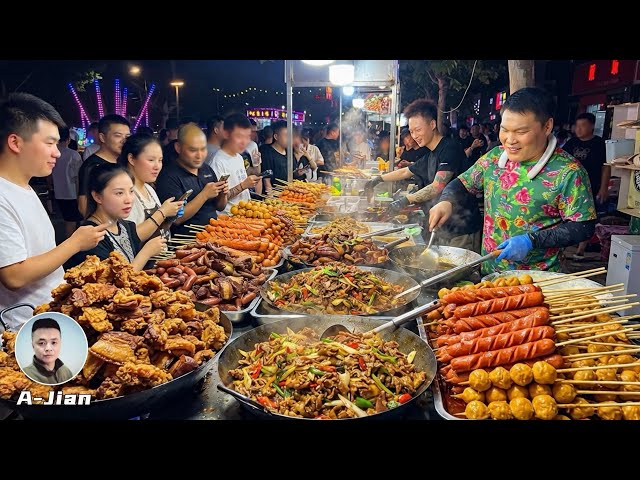
thin dough. After wrapping , the wontons are cooked in boiling water. The broth is prepared in advance, and seaweed, dried shrimp, cilantro, and chopped green onions are added to a bowl for flavor before hot broth is poured in. Finally, the cooked wontons are scooped into the bowl. The wonton wrappers are thin and translucent, and the meat filling is tender and juicy . Chinese charcoal-grilled skewers are a popular street food in markets and night markets throughout China. They come in a wide variety and are loved by people of all ages. Vendors skewer
fresh lamb, pork belly, tofu, and other ingredients onto wooden skewers and grill them over charcoal. The high temperature of the charcoal fire forces out the natural oils from the ingredients, releasing a rich meaty aroma. The aroma of roasting meat rises, and the meat is repeatedly turned during the roasting process, sprinkled with cumin, chili, salt, and other special seasonings. This is a perfect snack to satisfy your cravings at the market. It's a century-old traditional Chinese handmade throat-soothing snack, pear syrup candy, made and sold
on-site. It's made by slowly simmering snow pears with licorice, mint, and other herbs into a thick syrup , which cools and solidifies into large blocks of sugar, then is pounded into small cubes. The finished product is translucent and golden, with a thin layer of sugar frosting on the surface . It has a sweet taste with a hint of minty coolness, not too cloying. It's both a satisfying snack and has medicinal properties. 10 RMB per bag. This is a highlight of the northern market: handmade pulled noodles . A classic Chinese noodle dish , the noodles are
made by repeatedly stretching and tossing the dough with both hands. In just a few strokes, the coarse dough is transformed into thin, even noodles . The entire process is swift, skillful, and visually appealing. The pulled noodles are then cooked in a boiling pot of broth and served in a pre-prepared, flavorful bone broth. Garnished with chopped scallions and often accompanied by a braised egg, the noodles are chewy and smooth, with a rich wheat aroma. The broth is warm and savory. A bowl of this is filling and warming, a popular main meal and snack
among market patrons. It also showcases the exquisite craftsmanship of northerners in making noodles. Liangpi (cold skin noodles) is a popular dish in both northern and southern markets. The refreshing snacks at the market come in two types: wheat liangpi (cold skin noodles) and rice liangpi. Made from steamed starch, the finished product is thin, smooth, and incredibly chewy. The vendors sell whole sheets of liangpi on-site, and each purchase includes gluten and a secret-recipe sauce . To eat, cut the liangpi into wide strips, pour on the sweet, sour,
and spicy sauce, mix well, and enjoy the smooth, chewy texture—a refreshing and palate-cleansing experience . This is a very popular dried goods stall in the market , filled with various natural dried fruits, nuts, and health-promoting ingredients. The variety is extensive, including raisins, dried hawthorn, dried figs, black mulberries, goji berries, red dates, walnuts, etc., all displayed outdoors. These dried goods are available for customers to choose from and can be weighed and packaged according to their needs . They can be enjoyed in various
ways, such as as a quick snack, or soaked in water, used in soups, or cooked into porridge. In Chinese dietary concepts, mulberries, goji berries, red dates, and hawthorns all have nutritional value. Sweet and sour dried fruits are suitable for all ages, while nuts are nutritious and are common ingredients purchased at markets. Traditional glutinous rice, popular in markets across the country, is a sweet, glutinous rice dish made by steaming glutinous rice and red dates for a long time. The dark surface is made from cooked date paste, with the date aroma
fully infused into the rice. It is soft, sweet, and fragrant with a rich date flavor that is not greasy. Fried chicken skewers are another option. Popular street food at the market, chicken cutlets, are mostly made with chicken breast, skewered on bamboo sticks, and deep-fried at high temperature until the skin is golden brown and puffed up. After draining excess oil, they are evenly coated with a spicy and cumin seasoning powder. The outer skin is slightly crispy, while the inside is tender and substantial. It's a popular and satisfying fried snack
enjoyed by people of all ages while strolling through the market. Another stall sells Northeastern- style rice rolls, made by wrapping seasoned rice in large cabbage leaves. The vendor first mixes the rice with chili sauce, shredded carrots, cilantro, and crushed peanuts. The resulting filling is savory and rich, with a complex texture that is crisp, tender, and sweet. The cabbage balances the richness of the rice, offering a refreshing combination of vegetables and the aroma of soy sauce and rice . It can be both a treat and a proper meal, and is very
popular at markets. Take a whole, fresh cabbage leaf, spread the mixed rice in the center, fold the leaf inwards to completely wrap the filling, and finally wrap it in plastic wrap to shape it for easy eating. Cantaloupe is a common seasonal fruit at markets. The rind of a cantaloupe is covered with alternating light and dark yellow-green stripes, and it's round and small. Vendors will cut pieces for passersby to sample. A ripe cantaloupe has layered flesh; the outer layer is crisp and sweet, while the inner flesh is orange-yellow and creamy, juicy...
Pork tenderloin pies, a popular and affordable snack , are a classic school gate treat for many. Affordable and generously portioned, they're a perfect snack to grab while browsing the market – filling and delicious. To make them, round, leavened dough is first fried in a large iron pan until golden brown and fluffy on both sides, with a slightly crispy outer layer. Tender, marinated pork tenderloin slices are then added, resulting in a glossy, flavorful broth. When a customer orders, the vendor slices the fried pie in half and generously scoops in a
large spoonful of pork tenderloin. Some vendors also add lettuce and a touch of sweet chili sauce. One bite reveals a soft pie and tender meat, the savory meat juices mingling with the aroma of the pie. Holding it warm in your hand, eating it on the go, it has a special local flavor. A classic traditional snack from Northern China, called "Donkey Rolling," it's a very popular street food in markets. Its name is quite interesting because the final step involves rolling it in roasted soybean powder, resembling a donkey rolling on the ground, hence the cute
name. First, steamed glutinous rice dough is rolled into a soft, thin sheet on a board covered with soybean powder. Then, a layer of smooth red bean paste is spread on the dough. Finally, it's rolled up, cut into small pieces, and then coated with soybean powder again. This delicious treat is also available for 300 yuan. With a history spanning many years, this snack boasts an amazing texture . The outer layer of soybean powder carries a roasted, slightly charred aroma, while the glutinous rice inside is soft and chewy. The red bean paste filling in the
middle is smooth, sweet, and creamy. It's not sticky at all, sweet but not cloying. A classic traditional snack – Qiegao (also called Niangao) – is made from millet, giving it a warm yellow color and a natural grain aroma. It's not as sticky and has a more layered texture. White glutinous rice (also called Jiangmi) is steamed to a milky white color, with a soft and sticky texture. Both are steamed for a long time in traditional large pots. Layers of rice and dates create a flavor that evokes the heart of northern markets and is a traditional Chinese
snack enjoyed for hundreds of years. A very popular street food, Liangpi (cold skin noodles ) is made by mixing flour into a batter, spreading it into thin sheets, and steaming it. This golden-yellow Liangpi also contains mixed grains , giving it a subtle grain aroma. The vendor will cut the entire sheet of Liangpi into wide strips, add refreshing cucumber shreds, and then add a spicy and sour sauce at home. Mix well and enjoy ! A serving of fermented tofu costs only a few yuan. It's chewy, smooth, and has the elasticity of dough. Fermented tofu is a
traditional fermented food . The white "fuzz" on the surface of the tofu is beneficial mycelium formed during fermentation, making the tofu softer and more fragrant. You don't need to worry about it being spoiled. Sterilizing the fermented tofu with white wine also adds a unique aroma. Then, the tofu pieces are rolled in a mixture of chili powder, salt, and Sichuan peppercorn powder to coat each piece with spices. Finally, it's sealed in a jar and fermented for a period of time, resulting in a richer flavor. The finished fermented tofu is savory,
slightly spicy, and has a rich flavor. It's a "rice-eating wonder" that Chinese people have enjoyed for thousands of years. It 's perfect with congee, noodles, or steamed buns. It's also a unique traditional fermented food in China. A serving of ramen costs 35 yuan . The vendors at the market are making "pulled noodles" on the spot. By repeatedly kneading, slapping, and stretching the dough, they create thin, long noodles. The dough is folded and stretched several times to create noodles of uniform thickness. They cook quickly in boiling water. Freshly
cooked noodles are chewy, smooth, and have a rich wheat aroma. The most common way to eat them at the market is beef noodles. Wontons, freshly made and cooked at the market, are a classic Chinese home-style snack. First, thin dough wrappers and fresh meat filling are prepared. A suitable amount of filling is placed on a wrapper, folded in half, and the edges are pinched closed. Then, the two corners are folded in half again and sealed. The wontons are now wrapped. After wrapping, they are cooked in boiling water and then placed in a bowl. A bowl of
fragrant wontons is ready. The vendors fix the rested dough on a wooden board and use a special noodle-cutting knife to shave the dough into a boiling pot, one slice at a time. The shaved noodles are thick in the middle and thin at the edges, like willow leaves. After being boiled, the dough is chewy and smooth, with a rich wheat aroma. The most common way to eat it at the market is to pour a spoonful of spicy topping over it. A bowl of this is both fragrant and filling. To make fried dough sticks, the dough that has been rested in advance is rolled into
a thin sheet and cut into even strips. The vendor uses chopsticks to gently press down in the middle of each strip. This is a key step for the fried dough sticks to be fluffy and crispy. The purpose of these chopsticks is to press the two strips of dough together firmly so that they stick together when frying. Stack the two strips together and press down in the middle with the back of a knife. This way, when frying, the two strips will stick together. The dough will naturally separate, forming a fluffy structure in the middle. Pinch the ends of the
dough, stretch it, and then place it into the boiling oil. The dough will quickly expand in the hot oil . Keep turning it with chopsticks to ensure even heating, and fry until golden brown and crispy. Freshly fried dough sticks are crispy on the outside, soft and porous on the inside, and exude a rich wheat aroma. They cost 2 yuan each. Paired with a bowl of soy milk or tofu pudding, it makes the most authentic Chinese breakfast. Beijing's specialty snack is called "Gezhihe". It is made by spreading a thin sheet of mung bean flour batter, rolling it up,
cutting it into small pieces , and frying it in oil until golden brown and crispy. It makes a "crunching" sound when you bite into it. The crisp sound of the fried radish balls is what gave them their name. They 're a super popular freshly fried delicacy at the market , savory, crispy, and delicious eaten on their own , or added to stir-fries or stews. These incredibly popular fried radish balls are made by the vendor using this machine to squeeze the prepared radish batter directly into the hot oil, then frying the radish and batter together. They're a
common homemade snack in northern China, fried into small, golden-brown balls. Fresh out of the fryer, the balls are crispy on the outside and soft on the inside, with a sweet radish flavor that intensifies with each chew. They're delicious eaten on their own, or added to stews or soups – a truly down-to-earth and delicious treat from the market. The super popular street food in China – multigrain pancakes – is made by mixing mung beans, millet, and other grains into a batter, spreading it thinly on a griddle , adding an egg, spreading sauce, and
then adding crispy fried dough sticks and lettuce. It's rolled up and eaten! The freshly made pancake is soft and chewy with a slightly charred aroma, paired with the crispy fried dough sticks and savory sauce for a rich and layered flavor. It's a top choice for many people's breakfast and one of the most popular snacks in the market. A serving costs 7 RMB. Traditional fried cakes are made with glutinous rice, filled with red bean paste, and fried until golden brown. The outer layer is soft and chewy with a slightly charred aroma, while the filling is
sweet and delicious. One bite is... Sweet and glutinous, with a truly authentic flavor, this traditional pastry costs 2.5 RMB per serving . Made with eggs, flour, sugar, and other ingredients without adding a drop of water, it's baked in a special mold, releasing a rich egg aroma. It's sweet but not cloying, becoming more fragrant with each chew. The sesame seed cake vendor rolls out the pre-proofed dough, spreads it with oil and sugar filling, rolls it up, rolls it into a round cake , sprinkles white sesame seeds on top, and then bakes it on a griddle
until golden brown and crispy on both sides. Fresh out of the oven, the cake's outer layer is so crispy it crumbles, and inside, the layers are distinct , offering either the savory aroma of the oil or the subtle sweetness of the sugar filling. It's served hot. The best time to eat them is at 2 RMB each. You can also fill them with meat or vegetables . This braised food stall mainly sells braised pork intestines and pig's head meat. The pork intestines are repeatedly cleaned and deodorized, then slowly braised in a rich broth. The braised pork intestines
are oily and translucent, and have a soft, chewy texture. The pig's head meat is braised until tender, with a soft skin and fragrant meat. The fatty parts melt in your mouth, while the lean parts are firm, flavorful , and savory. The price is affordable. Egg burgers, also known as meat and egg burgers, are very popular at street markets and are a classic snack that many people grew up with. The chef uses a special round, porous frying mold. First, a little oil is poured into the grooves, then a fresh egg is cracked in and left to solidify slightly. Then,
a layer of flavorful seasoned meat filling is added , and the bottom is fried until set. It's then flipped and continued to fry slowly until both sides are golden brown and crispy . The entire process is done over low heat, allowing the aroma of the egg, meat, and dough to fully meld. After frying, it's brushed with sweet sauce, hot sauce, or garlic sauce for added flavor. The finished product has a slightly crispy exterior and a soft interior. It costs 5 RMB each . The stall also sells whole roasted chickens and chicken legs, both marinated in Orleans
seasoning beforehand. After being thoroughly marinated, the chicken is placed in a rotating oven and roasted continuously until the oil is slowly rendered out. The skin is roasted until it is oily, reddish-brown, and fragrant. The roasted chicken legs are thick and firm, making them incredibly satisfying to eat . The whole roasted chicken is quite substantial, with crispy skin and tender, juicy meat . A chicken leg costs 5 RMB, while a whole chicken costs 22 RMB. After roasting, you can sprinkle cumin and chili powder on it as desired. The aroma is rich,
and the hot chicken is delicious and satisfying. This is a roasted balut (fertilized duck egg) from the market. Balut is an egg that is incubating , and a chick has already formed inside. It still has blood streaks and downy feathers. The vendor will skewer the balut. Grilled on a griddle until the outer skin is crispy and the inside is cooked through, then brushed with sauce and sprinkled with cumin and chili powder. It has the aroma of eggs and the texture of meat. Five-spice tofu skin sold at the market is a common bean product in northern China. It
is made from ground soybeans, coagulated, pressed, and then braised to color, resulting in a brownish-red surface with a subtle five-spice flavor . It has a firm, resilient texture, and the surface shows the fine lines created by pressing. The most classic way to enjoy it is as a cold salad, sliced and served with cucumber strips and cilantro, drizzled with garlic sauce and spice... Oil and chili oil, refreshing and appetizing, many people also buy it to make braised food platters at home. The more you chew, the more fragrant it becomes. Freshly
stir-fried shredded pancakes are the most filling hot meal at the market. Pre-baked pancakes are cut into thin strips and stir-fried with bean sprouts, eggs, and scallions. The vendor stir-fries them in a large iron wok over high heat , first scrambling the eggs, then adding the pancake strips and side dishes, and drizzling with soy sauce, vinegar, and sesame oil. The stir- fried pancake strips are crispy and fragrant on one side, and soft and flavorful on the other , coated with the aroma of sauce and side dishes. It is savory and rich. A bowl of it is
fragrant and filling, a must-eat "staple food" for many people when going to the market. A serving of braised pork offal and baked buns costs 10 RMB. The pork intestines and other ingredients are slow-cooked in a rich broth, then soaked in the broth with unleavened baked buns and tofu. The result is a savory and flavorful dish, especially delicious when eaten hot. Another Beijing specialty is pan -fried buns , made by first pan-frying and then steaming in a large iron pan until the bottom is golden brown and crispy, with a fragrant aroma. The dough is
soft and filled with chives and eggs or meat filling. They are most fragrant when freshly fried, crispy on the outside and tender on the inside. Each bun costs 1.5 RMB and is especially delicious when eaten hot. A classic market snack, charcoal-grilled lamb skewers are grilled directly over charcoal by the vendor. The meat skewers sizzle and drip oil under high heat, sprinkled with cumin and chili powder, grilled until the outer skin is crispy and fragrant, and the inside is tender and juicy. Freshly grilled lamb skewers, with their charcoal aroma, burst
with juice with every bite, savory and flavorful . The warmth and freshness of eating them right away is the most comforting taste in the market. The beef and lamb stalls sell braised offal; the stalls are filled with various braised beef and lamb parts. Customers can use tongs to select the parts they want, bought by weight. They can be sliced and used in cold dishes or stews at home. This is hand-cut noodles at the market. The on-site preparation of hand-pulled noodles is a staple food belief ingrained in the bones of northerners. The stall owner
uses a large rolling pin to roll the dough into a paper-thin sheet, sprinkles cornmeal to prevent sticking, folds it up, and cuts it into even, thin strips with a large knife . This kind of noodle doesn't have the hard texture of machine-made noodles. After cooking, it becomes chewy and smooth, with a natural wheat aroma . The climate and soil of northern China are more suitable for growing wheat, so noodles naturally became a staple food. From morning to night, three meals a day revolve around noodles . There are countless ways to make noodles in the
north. Noodles are no longer just food, but a way of life. Let's see how the stall owner makes them. The old-fashioned puffed snack stall is full of the lively atmosphere of childhood memories . They are sold in large packages by weight, and the prices are affordable. The stall owner uses an old-fashioned puffing machine to press corn kernels and rice into hollow strips. Only corn, rice, or millet are used, without any extra sugar, oil, or additives. High temperature and high pressure puffing preserves the original caramelized aroma of the grains. As
soon as the machine is started, the golden raw materials are pushed into the heating chamber and instantly "pop". The sesame seeds expand, squeezing out of the outlet into hollow strips , still steaming, and falling directly into the basket. They carry a faint, fresh grain aroma , yet are very light on the palate, with a slight sweetness that intensifies with chewing, never becoming greasy. This freshly ground pure sesame paste is an indispensable "soul seasoning" on the dining table. It 's made by simply roasting the sesame seeds and grinding them in a
machine without adding water or oil, relying entirely on the sesame's own oils. The steaming sesame paste flows directly into glass jars, emitting a wonderful aroma. Bottled pastes, all made fresh daily, are also displayed nearby, ensuring maximum freshness. Our visit to the lively village market has come to an end. It's great that you've made it this far! Here you'll find all sorts of traditional delicacies and handmade foods , embodying the daily flavors and cultural life of ordinary people in northern China. Thank you for watching. Next time, I'll
take you to experience more delicious Chinese cuisine. Remember to subscribe!