Exploring a Traditional Market in China: Local Food and Market Life
Video transcript
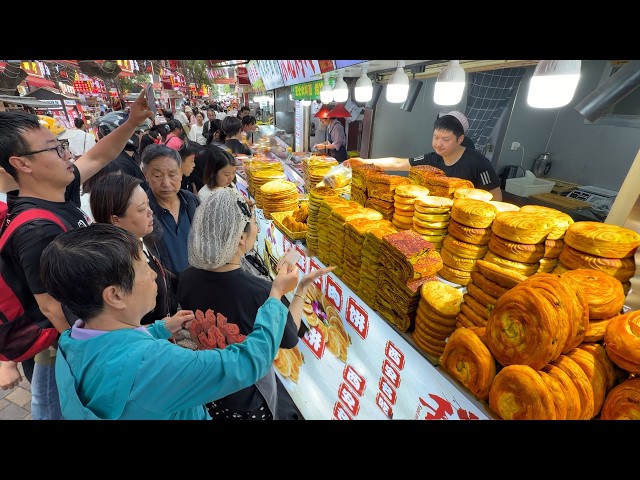
Hello friends, I'm DaWen. Today, let's explore a bustling traditional market in China. I'll start my morning with a bowl of wonton soup. Wonton is one of Southern China's most popular traditional breakfasts. Thin wrappers surround a juicy pork filling, usually served in a light, clear broth. Simple, delicious, and satisfying. This is Yunnan-style cured pork skin, mainly used to make rich soup stock. These freshly baked mini cakes are common in traditional markets across China. The batter is mixed with eggs and honey, and golden cakes are ready in just
two minutes. Me: I'll have 6 yuan worth. Soft, fluffy, and perfect for eating while exploring the market. Rather than buying medicine from pharmacies, some Chinese people prefer purchasing medicinal herbs at traditional markets. Vendor: Medicinal herbs work best for numb hands and feet. "A customer recovered from numb hands and feet with my herbs, and treated me to dinner yesterday to thank me." Vendor: This is sappan wood. It's used in soups and is believed to aid digestion. Char siu is a traditional Southern Chinese dish made from marinated roasted
pork. Slightly charred outside, tender inside, with a perfect balance of sweet and savory. This stall sells fish tofu. Fish tofu is mainly made from fish paste, soy protein, starch, and eggs. After deep-frying, it's soft, springy, and savory. Fish tofu can be enjoyed as a snack, and is also popular in hot pot and mala tang. Fish tofu tastes best when freshly fried, so it's usually cooked to order. Stuffed bitter melon is usually filled with minced pork and then steamed. The filling is juicy, while the melon adds a refreshing hint of bitterness. Stuffed
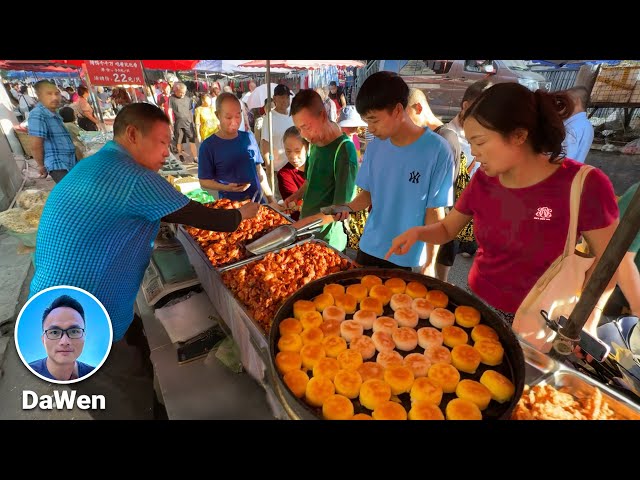
green peppers are commonly filled with pork or fish paste. The peppers stay crisp, while the filling is juicy and tender. These stuffed dishes are especially popular in Southern China, including Guangdong and Guangxi. Besides peppers and bitter melon, eggplant, mushrooms, and tofu are also commonly used. This stall sells pan-fried meat patties, with seaweed, corn, and scallion flavors. These patties are typically made with flour, pork, a little fish paste, and scallions. Besides pork, some regions also use fish, beef, or Chinese chives. Fresh off the
griddle, their aroma is irresistible. I'll try a scallion pork patty. Very soft and tender, savory and juicy! In China, beef offal is sometimes even more popular than beef itself. It usually includes tripe, intestines, tendon, brisket, and other cuts. Each region uses its own blend of spices. Braised beef offal can be enjoyed on its own or as part of a meal. Vendor: It sharpens knives effortlessly, without water. This sharpening tool is forged from T12 high-carbon bearing steel, designed for serrated edges and blade repair, making it popular with
carpenters and professional sharpeners. Unlike the savory tofu pudding common in Northern China, many places in the south prefer it sweet. Silken tofu with ginger syrup is a classic Cantonese dessert. In Northern China it's often a breakfast staple, while in Guangdong it's enjoyed as afternoon tea or dessert. The ginger syrup is sweet with a gentle spicy kick, creating a uniquely delicious flavor. This stall sells braised goose. The braising liquid is slowly simmered with over a dozen herbs and seasonings. In Guangdong, goose is generally more popular
than duck, and usually more expensive. Lion Head Goose is one of the classic breeds used for braised goose. The skin is rich in collagen and is many people's favorite part. Braised goose is commonly served with rice or congee. This stall sells roasted pork backbone. Customers can choose their preferred level of roasting. The pork is marinated with spices before being roasted over high heat, giving it a fragrant, lightly seasoned crust. Many people prefer the more deeply roasted pieces for their stronger smoky aroma. This stall sells dried lily bulbs. In
traditional Chinese medicine, lily bulbs are believed to help soothe the lungs. They are commonly used in sweet soups and slow-cooked soups. Many women value them for their beauty and wellness benefits. Century eggs are usually made by preserving duck eggs in an alkaline mixture, turning the whites into a dark jelly and the yolks deep green. They are often served with shredded ginger, soy sauce, or vinegar. Try a century egg once, and you'll probably never forget it. This stall sells freshly pressed peanut oil. Peanut oil is one of China's most widely
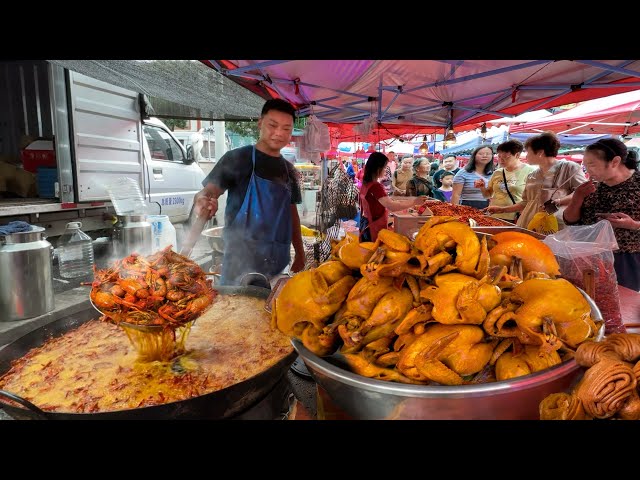
used cooking oils. Compared with bottled cooking oil, many people prefer freshly pressed oil, because of its richer aroma. Vendor: Would you like me to chop the chicken? Customer: Yes. This salt-baked chicken is prepared with a local herb called Five-Finger Peach. Five-Finger Peach is a traditional herbal ingredient commonly used in Guangdong. It adds sweet coconut-like notes with a subtle woody aroma, taking the flavor of the chicken to another level. Wampi is a popular summer fruit in Southern China. It has a wonderfully complex fruity aroma. When
fully ripe, it's juicy, sweet, and tangy. The darker the skin, the sweeter it tastes. So delicious! I could easily eat a whole kilogram! Many Chinese people enjoy chewing meat that's still on the bone. This spicy chicken wing tip stall is packed with customers. Wing tips contain very little meat, but that's exactly where the fun of eating them lies. The rich hot-and-sour sauce makes them even more addictive. They're enjoyed as a snack and are also a popular beer companion. In Southern China, rice rolls are one of the most popular everyday meals. This is
rice batter. Ground pork, green beans, carrots, corn, wood ear mushrooms, and leafy greens are classic fillings. Tomato sauce and wampi sauce are the classic condiments. The silky rice sheet is soft and smooth, with savory, sweet, and tangy flavors layered together. One market, one way of life. Every flavor tells the story of everyday life here. Thanks for watching. See you next time as we continue exploring Chinese food and markets.